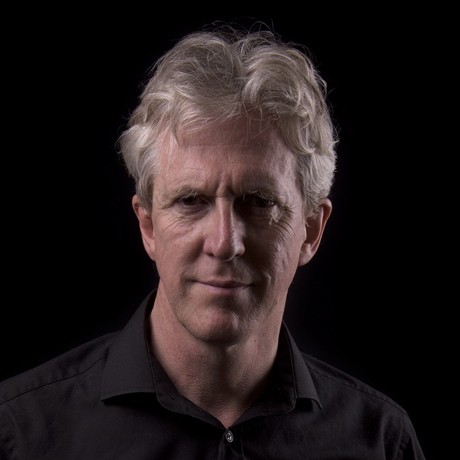
Peter B. Lloyd
Peter B Lloyd is a freelance writer based in London, England. He has interests in:
- The philosophy of mind, in particular the problem of consciousness.
- Information design: the delivery of complex information in way that can readily be understood by the human mind.
- The history of information design and graphic design in subway maps.
His published writings in the philosophy of mind have promoted the concept of consciousness as an irreducible and fundamental constituent of reality. His essay “Mental Monism Considered as a Solution to the Mind-Body Problem” (in Alexander Batthyany & Avshalom Eltzur’s edited compilation of essays, Mind and its Place in Nature: Non-Reductionist Approaches to the Ontology of Consciousness, 2006) was a substantive defense of this view. This theoretical position and its implications were originally presented in his self-published books Consciousness and Berkeley’s Metaphysics (1999) and Paranormal Phenomena and Berkeley’s Metaphysics (1999).
Peter has also published on the popularization of philosophy in science fiction, including the Wachowski Brothers’ Matrix film trilogy, in his book Exegesis of the Matrix (2003), and in his contributions to Benbella Books SmartPops series: “Glitches in the Matrix … and How to Fix Them” (in Taking the Red Pill: Science, Philosophy and Religion in The Matrix, ed. Glenn Yeffeth, 2003), “SIG: Military uses of Artificial Consciousness” (in So Say We All: An Unauthorized Collection of Thoughts and Opinions on Battlestar Galactica ed. Richard Hatch, 2006), “Superman’s Moral Evolution” (in The Man from Krypton: A Closer Look at Superman, edited by Glenn Yeffeth, 2006), and “Communion of Blood” (in A Taste of True Blood: The Fangbanger’s Guide, ed. Leah Wilson). Peter was interviewed on the science and philosophy of the Matrix in the Warner Brothers DVD Roots of the Matrix (in The Ultimate Matrix Collection). Two of his Matrix essays are published online on Ray Kurzweil’s web site: Glitches in the Matrix and Glitches Reloaded.
Peter graduated in mathematics at Cardiff University, Wales, where he stayed on to carry out research in solar engineering from 1981. From 1987, he worked as a software developer in the Clinical Trials Service Unit at the University of Oxford. The ISIS group at the CTSU carried out what were, at the time, the largest clinical trials of medical interventions ever executed. With tens of thousands of patients recruited from intensive care units around the world, the trials were able to demonstrate the efficacy of emergency treatments for heart attacks such as streptokinase, a clot-dissolving drug that had previously been dismissed as too dangerous to use. While in Oxford, he pursued what had previously been a private interest in philosophy by studying under Dr. Michael Lockwood at the Oxford University Department for External Studies (now renamed and endowed as Kellogg College), and sitting in on seminars and lectures in philosophy. His main interest was consciousness and the mind-body problem.
Peter will be chairing the Science Fiction sessions of DUXU16 (Design of User eXperience and Usability) in Toronto, July 17–22, 2016 (an associate conference of HCII16 (Human Computer Interface International 2016). Besides sci-fi per se, this will also cover blue-sky research that can benefit from the exploration of possible scenarios in the manner of science fiction. One of the topics to be covered is the problem of controlling machines whose intelligence matches or exceeds that of humans, but which may lack any capacity for empathy or moral awareness. This reflects the existential threat posed by uncontrolled AI, which is recognized in the Lifeboat Foundation’s AIShield program.
Read his LinkedIn profile.