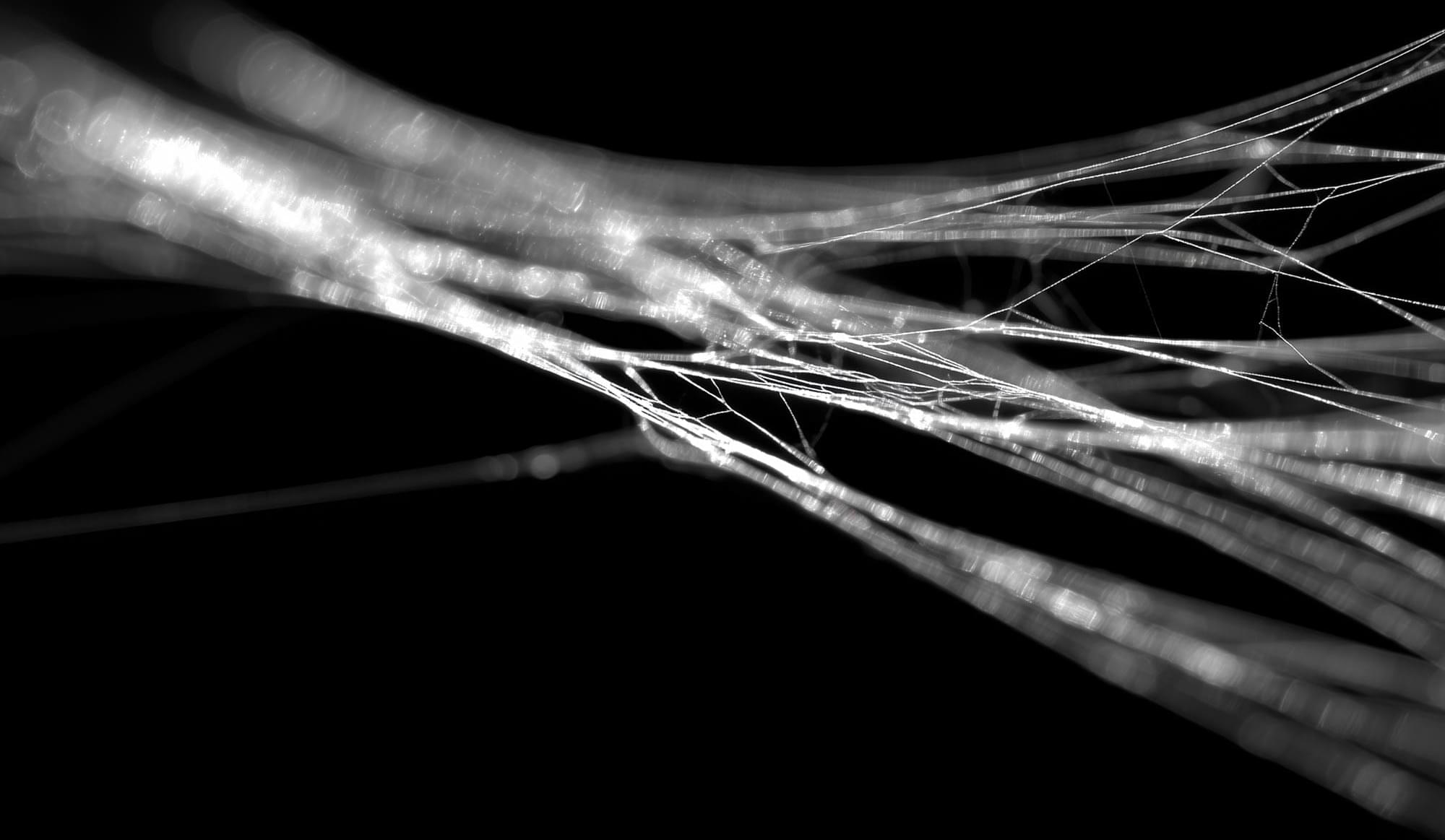
By uncovering the molecular interactions that give spider silk its remarkable properties, researchers have revealed principles that could inspire advanced materials and shed light on biological processes far beyond the spider’s web.
Scientists found that synchronizing activity between two brain regions made people more generous.
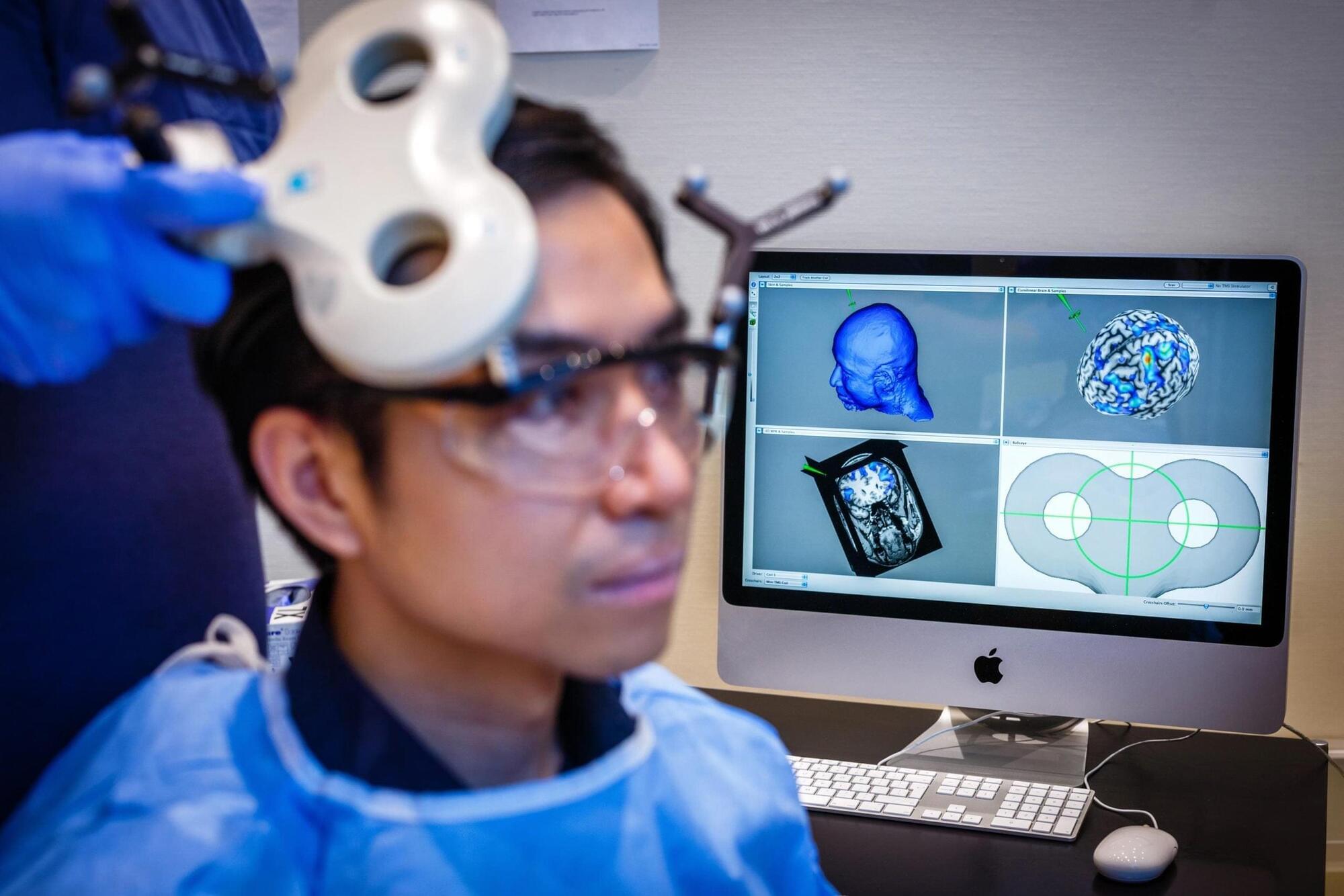
A new study suggests that synchronizing activity in specific parts of the brain can make people more likely to act generously. Research published today (February 10) in the open-access journal PLOS Biology reports that stimulating two brain regions in a coordinated way increased altruistic behavior. The study was led by Jie Hu of East China Normal University in China, working with colleagues from the University of Zurich in Switzerland.
Why some people are more altruistic than others.
A conversation co-published by AI House Davos and Michael Levin’s Academic Content (@drmichaellevin)
In this conversation, we explore how intelligence exists across all scales of life, from cells to collectives, and what this means for our understanding of AI, minds, and what it means to be human.
Professor Michael Levin challenges the assumption that intelligence begins with brains, revealing how biological systems improvise, adapt, and solve problems in ways that go far beyond what our computational architectures attempt. From cognitive glue to the ethics of diverse intelligence, this interview questions the categories we’ve inherited and asks what truly matters as we enter an era of radically different embodiments.
Speaker.
Michael Levin (Director at Allen Discovery Center at Tufts University)
Moderator.
Louisa Hillegaart (Founder’s Associate, AI House Davos)
© AI House Davos 2025
In this powerful opening session of the Strong AI Summit, moderator Dr. Mahault Albarracin brings together legendary thinkers redefining the boundaries between biology, cognition, active inference, and AGI.
00:00 Introduction by Dr. Mahault Albarracin.
00:42 Why study living systems when designing AI?
02:10 Dr. Michael Levin on biological intelligence and collective behavior.
04:25 Dr. Dalton on active inference foundations.
06:10 Prof. Stephen Grossberg on alignment and stable learning.
09:05 Limits of biological analogies in AI design.
11:45 Collective problem-solving and emergent goals.
13:30 Closing reflections.
Featuring:
Dr. Michael Levin, pioneer in morphogenesis, bioelectric signaling, and the xenobot project.
Prof. Stephen Grossberg, the most cited computational neuroscientist and creator of ART theory.
Dr. Dalton Sakadolsky, leading theoretician in Bayesian mechanics & active inference.
Oxidative stress is a direct consequence of an excess in the body of so-called free radicals—reactive, unstable molecules that contain oxygen. Free radicals are normal metabolic by-products and also help to relay signals in the body. In turn, oxidative stress (an overload of these molecules) can be caused by lifestyle, environmental, and biological factors such as smoking, high alcohol consumption, poor diet, stress, pollution, radiation, industrial chemicals, and chronic inflammation.
When this occurs, it creates an imbalance between the production of free radicals and the body’s antioxidant defenses, which are responsible for neutralizing them.
Support this channel on Patreon to help me make this a full time job: https://www.patreon.com/whatdamath (Unreleased videos, extra footage, DMs, no ads)
Alternatively, PayPal donations can be sent here: http://paypal.me/whatdamath.
Get a Wonderful Person Tee: https://teespring.com/stores/whatdamath.
More cool designs are on Amazon: https://amzn.to/3QFIrFX
Hello and welcome! My name is Anton and in this video, we will talk about a strange electrostatic world of tiny organisms.
Links:
https://www.pnas.org/doi/epdf/10.1073/pnas.2503555122
https://www.cell.com/action/showPdf?pii=S0960-9822%2823%2900674-7
http://cell.com/current-biology/fulltext/S0960-9822(23)00772-8
Other videos:
#biology #science #electrostatics.
0:00 Static phenomena and electrostatic ecology.
1:50 Pollen and bees.
3:00 Flying spiders and ballooning.
4:10 Ticks.
4:40 Electrosensation.
5:40 Worms and jumping.
7:50 Worm parasites.
9:50 Practical applications and aeroplankton.
Enjoy and please subscribe.
Bitcoin/Ethereum to spare? Donate them here to help this channel grow!
bc1qnkl3nk0zt7w0xzrgur9pnkcduj7a3xxllcn7d4
or ETH: 0x60f088B10b03115405d313f964BeA93eF0Bd3DbF
The hardware used to record these videos:
When you look at text, you subconsciously track how much space remains on each line. If you’re writing “Happy Birthday” and “Birthday” won’t fit, your brain automatically moves it to the next line. You don’t calculate this—you *see* it. But AI models don’t have eyes. They receive only sequences of numbers (tokens) and must somehow develop a sense of visual space from scratch.
Inside your brain, “place cells” help you navigate physical space by firing when you’re in specific locations. Remarkably, Claude develops something strikingly similar. The researchers found that the model represents character counts using low-dimensional curved manifolds—mathematical shapes that are discretized by sparse feature families, much like how biological place cells divide space into discrete firing zones.
The researchers validated their findings through causal interventions—essentially “knocking out” specific neurons to see if the model’s counting ability broke in predictable ways. They even discovered visual illusions—carefully crafted character sequences that trick the model’s counting mechanism, much like optical illusions fool human vision.
2. Attention mechanisms are geometric engines: The “attention heads” that power modern AI don’t just connect related words—they perform sophisticated geometric transformations on internal representations.
1. What other “sensory” capabilities have models developed implicitly? Can AI develop senses we don’t have names for?
Language models can perceive visual properties of text despite receiving only sequences of tokens-we mechanistically investigate how Claude 3.5 Haiku accomplishes one such task: linebreaking in fixed-width text. We find that character counts are represented on low-dimensional curved manifolds discretized by sparse feature families, analogous to biological place cells. Accurate predictions emerge from a sequence of geometric transformations: token lengths are accumulated into character count manifolds, attention heads twist these manifolds to estimate distance to the line boundary, and the decision to break the line is enabled by arranging estimates orthogonally to create a linear decision boundary. We validate our findings through causal interventions and discover visual illusions—character sequences that hijack the counting mechanism.
Researchers have analyzed the stepwise hydration of prolinol, a molecule widely used as a catalyst and as a building block in chemical synthesis. The study shows that just a few water molecules can completely change the preferred structure of prolinol. The research is published in the Journal of the American Chemical Society.
Physical chemistry applies the principles and concepts of physics to understand the basics of chemistry and explain how and why transformations of matter take place on a molecular level. One of the branches of this field focuses on understanding how molecules change in the course of a chemical reaction or process.
Understanding the interactions of chiral molecules with water is crucial, given the central role that water plays in chemical and biological processes. Chiral molecules are those that, despite comprising the same atoms, cannot be superimposed on their mirror image in a way similar to what happens with right and left hands or a pair of shoes.
A new study published in the journal Social Cognitive and Affective Neuroscience provides evidence that the human brain processes romantic partners differently than close friends, specifically within the reward system. The research suggests that while the brain creates a unique neural signature for a partner early in a relationship, this distinction tends to fade as the bond matures. These findings offer insight into how the biological drivers of romantic love may evolve from passion to companionship over time.
Relationships involve complex psychological states that differentiate a committed partner from a platonic friend. Scientists have sought to map these differences in the brain to understand the biological foundations of human bonding. Much of this research focuses on the nucleus accumbens. This small region deep within the brain, which relies heavily on the neurotransmitter dopamine, plays a central role in processing rewards and motivation.
Evidence from animal studies indicates that the nucleus accumbens is essential for forming pair bonds. Research on monogamous prairie voles shows that neurochemical signaling in this area drives the preference for a specific partner. The brain appears to undergo plastic changes that reinforce the bond.