Toggle light / dark theme

Andrew Yang: UBI Before UHI

Solving Job Loss, and the Future of Work ## Andrew Yang advocates for the implementation of Universal Basic Income (UBI) as a necessary solution to address job loss, income inequality, and societal unrest caused by technological advancements and AI-driven changes in the economy ## ## Questions to inspire discussion.

Universal Basic Income Implementation.

đŸ”č Q: What UBI amount should be set to provide an effective safety net?

A: UBI should be set at twice the poverty level, around $25,000 per person per year, providing enough for survival but not happiness to maintain work incentives while protecting against economic collapse.

đŸ”č Q: How can UBI be funded without government action initially?

A: Well-resourced tech billionaires could fund UBI directly to local communities to keep the middle class afloat during AI-driven changes, potentially catalyzing further philanthropy and government action.


The End of Work: Vinod Khosla’s Bold AI Prediction

What if AI made your paycheck optional? Vinod Khosla, one of the world’s greatest venture capitalists and an early backer of AI, believes the technology will take over 80% of labor, freeing humans to live on passion instead.

His track record backs up the boldness, as early bets on OpenAI, DoorDash, Instacart, and Square have made him one of the most consequential investors of our time.

In this episode of Titans, Khosla sits down with Fortune Editor-in-Chief Alyson Shontell to unpack his abundant vision for the AI future, what government policy should tackle for a more equitable 2040, and what the U.S. needs to do to win the global AI race.

Encryption: A Key Guardian of Our Digital Future

By Chuck Brooks and Bill Bowers.


Every time you send a text, pay for groceries with your phone, or use your health site, you are relying on encryption. It’s an invisible shield that protects your data from prying eyes. Encryption is more than just a technological protection; it is the basis for digital trust.

Encryption is more than just safeguarding data; it is also about protecting people. It helps ensure privacy by protecting persons from spying and exploitation. And it is widely adopted to help ensure digital transaction security. For National Security it serves to protect key infrastructure and government communications. And it has a human rights function by providing citizens with peace of mind by ensuring the safety of their personal information. In places where surveillance is widespread, encryption can even defend free expression and opposition. It is a human right in this digital age.

In my book Inside Cyber: How AI, 5G, IoT, and Quantum Computing Will Transform Privacy and Security, I referred to encryption as the “linchpin of privacy and commerce in a connected society.” Without it, the digital economy would crumble under the strain of criminality, fraud, and spying.

Microsoft: Hackers abuse OAuth error flows to spread malware

Hackers are abusing the legitimate OAuth redirection mechanism to bypass phishing protections in email and browsers to take users to malicious pages.

The attacks target government and public-sector organizations with phishing links that prompt users to authenticate to a malicious application, Microsoft Defender researchers say.

With e-signature requests, Social Security notices, meeting invitations, password resets, or various financial and political topics that contain OAuth redirect URLs. Sometimes, the URLs are embedded in PDF files to evade detection.

National report supports measurement innovation to aid commercial fusion energy and enable new plasma technologies

To operate fusion systems safely and reliably, scientists need to monitor plasma fuel conditions and measure properties like temperature and density that can affect fusion reactions. Making these measurements requires specialized sensors known as diagnostics.

A new report sponsored by the U.S. Department of Energy (DOE) recommends increased investment in America’s fusion diagnostic capabilities, a critical new technology that could provide DOE and Congress with information to speed up the delivery of commercial fusion power plants.

The report was produced as part of the DOE’s 2024 Basic Research Needs Workshop on Measurement Innovation, sponsored by the DOE’s Office of Science’s Fusion Energy Sciences (FES) program. It was chaired by Luis Delgado-Aparicio, head of advanced projects at the DOE’s Princeton Plasma Physics Laboratory (PPPL), and co-chaired by Sean Regan, a distinguished scientist and the director of the Experimental Division at the University of Rochester’s Laboratory for Laser Energetics.

Chinese cyberspies breached dozens of telecom firms, govt agencies

Google’s Threat Intelligence Group (GTIG), Mandiant, and partners disrupted a global espionage campaign attributed to a suspected Chinese threat actor that used SaaS API calls to hide malicious traffic in attacks targeting telecom and government networks.

The campaign has been active since at least 2023 and has impacted 53 organizations in 42 countries, with suspected infections in at least 20 more countries.

The initial access vector is unknown, but the researchers note that the threat actor, which Google tracks internally as UNC2814, has previously gained access by exploiting flaws in web servers and edge systems.

Spain arrests suspected hacktivists for DDoSing govt sites

Spanish authorities have arrested four alleged members of a hacktivist group believed to have carried out cyberattacks targeting government ministries, political parties, and various public institutions.

The group, which called itself “Anonymous FĂ©nix” and claimed they were affiliated with the Anonymous hacker collective, conducted distributed denial-of-service (DDoS) attacks against targets in Spain and several South American countries, according to the Spanish Civil Guard.

The first attacks occurred in April 2023 and peaked after the flash floods that struck Valencia in late October 2024, when the group’s members attacked multiple government websites, claiming Spanish authorities were responsible for the deaths and destruction caused by the storm.

Advances and Integrations of Computer-Assisted Planning,
 : Operative Neurosurgery

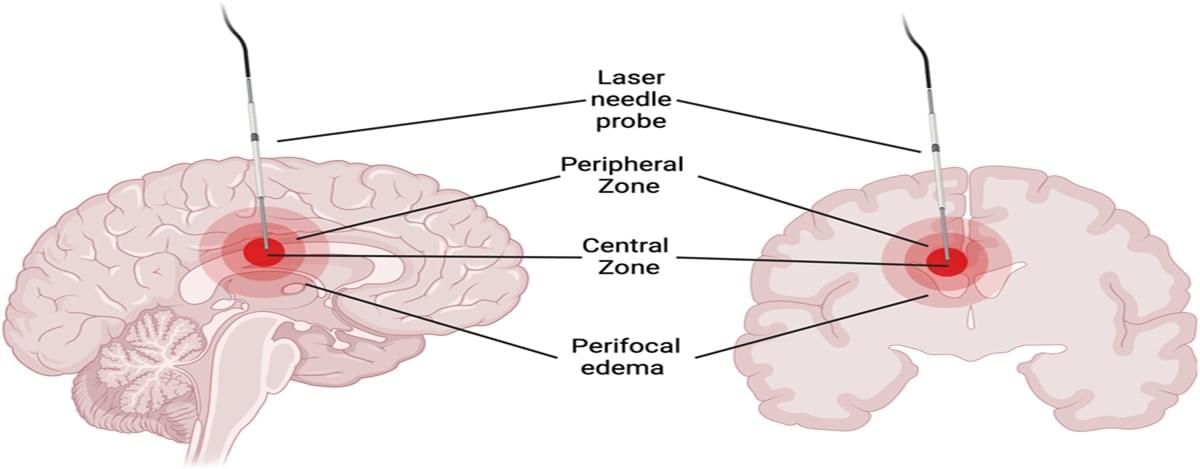
ONSNew ONSReview Advances and Integrations of Computer-Assisted Planning, Artificial Intelligence, and Predictive Modeling Tools for Laser Interstitial Thermal Therapy in Neurosurgical Oncology by Warman et al Johns Hopkins Medicine Congress of Neurological Surgeons (CNS) Isaac Yang.


E to surrounding healthy tissue, LiTT offers promising therapeutic outcomes for both newly diagnosed and recurrent tumors. However, challenges such as postprocedural edema, unpredictable heat diffusion near blood vessels and ventricles in real time underscore the need for improved planning and monitoring. Incorporating artificial intelligence (AI) presents a viable solution to many of these obstacles. AI has already demonstrated effectiveness in optimizing surgical trajectories, predicting seizure-free outcomes in epilepsy cases, and generating heat distribution maps to guide real-time ablation. This technology could be similarly deployed in neurosurgical oncology to identify patients most likely to benefit from LiTT, refine trajectory planning, and predict tissue-specific heat responses.

/* */