Scientists have discovered that applying an electric field to certain ceramics can dramatically redirect how heat moves through them.





Li Hao, Kuninori Suzuki et al. (University of Tokyo 東京大学大学院新領域創成科学研究科) report that lipophilic dye octadecyl rhodamine B (R18) is transported to the ER mediated by membrane transfer proteins. During autophagy, ER-resident R18 is transferred to the autophagic membrane via Atg2. After termination, R18 is reversed back to the ER, showing that the direction of bridge-type lipid transfer is modulated by metabolic states.
Bridge-like lipid transfer proteins (LTPs) contain a repeating β-groove domain and long hydrophobic grooves that act as bridges at membrane contact sites (MCSs) to efficiently transfer lipids. Atg2 is one such bridge-like LTP essential for autophagosome formation, during which a newly synthesized isolation membrane (IM) emerges and expands through lipid supply. However, studies on Atg2-mediated lipid transfer are limited to in vitro studies due to the lack of a suitable probe for monitoring phospholipid dynamics in vivo. Here, we characterized the lipophilic dye octadecyl rhodamine B (R18), which internalizes and labels the endoplasmic reticulum (ER) in a manner that requires flippases and oxysterol-binding protein–related proteins. Using R18, we demonstrated phospholipid transfer from the ER to the IM during autophagy in vivo. Upon autophagy termination, our data suggested the reversible phospholipid flow from the IM to the ER in response to environmental changes. Our findings highlight the critical role of bridge-like LTPs in MCS-mediated phospholipid homeostasis.

New research reveals that the Rhododendron pseudochrysanthum var. taitunense is a distinct subspecies, uniquely characterised by its glabrous leaves, larger seeds and specialised pollen morphology.
Found exclusively in the low-elevation mountains of Northern Taiwan, this rare taxon stands clearly apart from its close relatives within the species complex.
Read the full paper: doi.org/10.3897/phytokeys.271.
Our study examines the morphological and statistical differentiation within the Rhododendron pseudochrysanthum species complex through comparative analyses of macro-and micro-morphological characters. Using significance testing and cluster analysis, our results demonstrate that R. pseudochrysanthum Hayata ssp. morii (Hayata) Yamazaki var. taitunense Yamazaki is distinct from other members of the complex, namely R. morii Hayata, R. pseudochrysanthum Hayata, and R. hyperythrum Hayata. This taxon is characterized by glabrous mature leaves with revolute margins, larger flower buds with an elongated conical shape, larger pollen and seed sizes, and distinct pollen and seed morphology. Furthermore, R. pseudochrysanthum ssp. morii var. taitunense exhibits a restricted and localized distribution, occurring exclusively in low-elevation mountainous areas of Northern Taiwan.
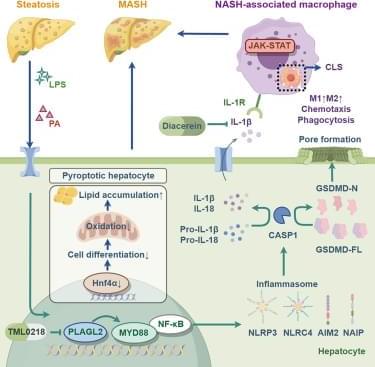
Duan et al. systematically delineate the spatiotemporal dynamics and key regulators of pyroptosis during MASLD progression. Hepatocyte-specific Plagl2 deletion alleviates MASH by suppressing MYD88-mediated inflammasome activation and restoring metabolic homeostasis. Pyroptosis-driven IL-1β release promotes macrophage differentiation into a phagocytosis-enhanced, JAK/STAT-activated, NASH-associated phenotype.