Thought Architect
Category: futurism – Page 4

3D imagery helps bring world’s ant diversity to life
For more than a decade, Evan Economo’s lab has been using micro-CT machines to scan insect specimens. The resulting X-ray images help researchers study the form and structure of insects—a subfield of entomology known as morphology—but the process is costly and time-consuming.
“One limitation is that you can get this rich 3D dataset, but it could take 10 hours to scan one specimen,” explained Economo, who chairs the University of Maryland’s Department of Entomology and holds the James B. Gahan and Margaret H. Gahan Professorship.
As a senior author of a paper published in the journal Nature Methods, Economo tested a high-tech workflow to speed up their efforts.


Current and future applications of photon-counting computed tomography in cardiovascular medicine
Learn more about this fascinating technique which is coming to cardiovascular medicine:
Paper:
Podcast with the authors: https://bit.ly/49oxvq9
Photon-counting CT (PCCT) represents a transformative advancement in cardiac imaging, addressing key limitations of conventional CT. This review synthesises current evidence to demonstrate how PCCT’s superior spatial resolution, enhanced tissue characterisation and multienergy capabilities broaden the diagnostic potential of cardiac CT. Applications include the precise detection and quantification of coronary artery calcifications, evaluation of coronary plaque burden and composition, improved assessment of coronary stents, and comprehensive myocardial tissue characterisation and perfusion analysis. By offering high-quality spectral information and detailed tissue characterisation, PCCT provides a non-invasive alternative for assessing coronary artery disease and myocardial pathology, reducing the need for invasive coronary angiography and cardiac MRI.

Explore Classic Shenmue’s World Online In Your Browser
Brynn Bateman unveiled the New Yokosuka project.

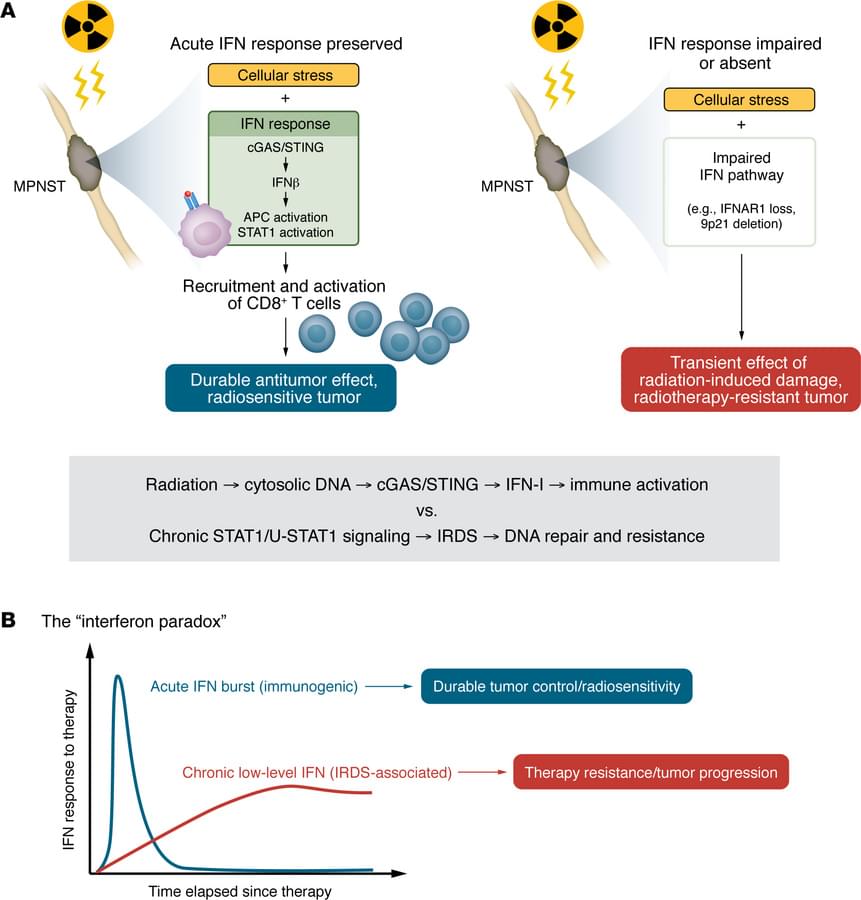
Abstract: IFN signaling at the nexus of the radiotherapy response in malignant peripheral nerve sheath tumors:
Sean P. Pitroda & Ralph R. Weichselbaum provide a Commentary on Iowis Zhu et al.: https://doi.org/10.1172/JCI195652
Address correspondence to: Ralph Weichselbaum, Department of Radiation and Cellular Oncology, The University of Chicago, 5,758 S. Maryland Ave., Chicago, Illinois 60,637, USA.
Find articles by Pitroda, S. in: | Google Scholar
Department of radiation and cellular oncology, the university of chicago, chicago, illinois, USA.

Nuclear PD-L1 regulates YAP-driven transcription via the PGE2-EP4-YAP-importin α3 axis in solid tumors
Satapathy et al. demonstrate that prostaglandin E2 promotes YAP-dependent nuclear translocation of PD-L1 via importin-α3. In the nucleus, PD-L1 cooperates with YAP-TEAD to enhance transcriptional activity, revealing a noncanonical role for PD-L1 in regulating oncogenic gene expression beyond immune evasion.
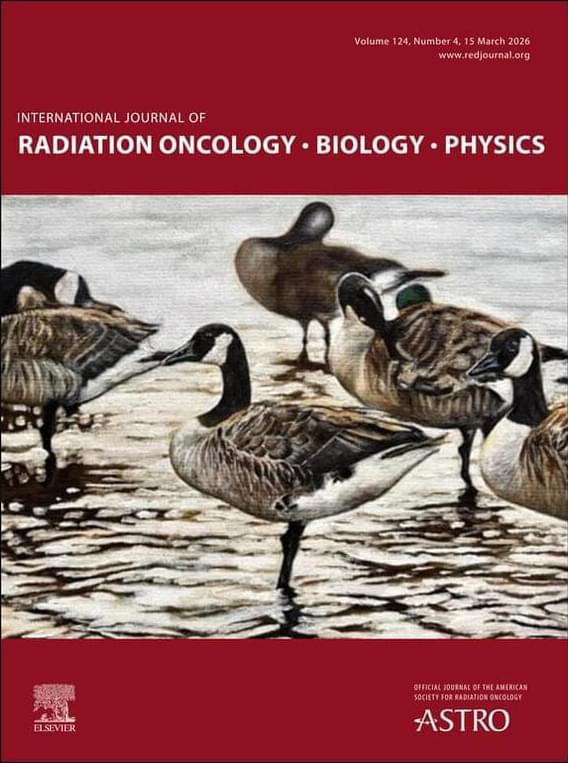
Incorporating Intensity Modulated Total Body Irradiation (IMRT-TBI) into Future Cooperative Group Clinical Trials: An NRG Hematologic Malignancies Working Group-Led Report from the National Clinical Trials Network
Read it in the RedJournal: @NRGOnc
: Intensity-modulated radiation therapy (IMRT) is increasingly used for total body irradiation (TBI) due to its ability to deliver myeloablative doses while sparing radiosensitive organs. To enable consistent evaluation in future National Clinical Trials Network (NCTN) studies, the xxx Hematologic Malignancies Working Group (HMWG) convened IMRT-TBI experts and NCTN leaders to develop consensus recommendations for standardized multi-institutional implementation.