An exploration of various forms matter can take in the universe and how it can go horribly wrong.
My Patreon Page:
https://www.patreon.com/johnmichaelgodier.
My Event Horizon Channel:
https://www.youtube.com/eventhorizonshow.
Music:
An exploration of various forms matter can take in the universe and how it can go horribly wrong.
My Patreon Page:
https://www.patreon.com/johnmichaelgodier.
My Event Horizon Channel:
https://www.youtube.com/eventhorizonshow.
Music:
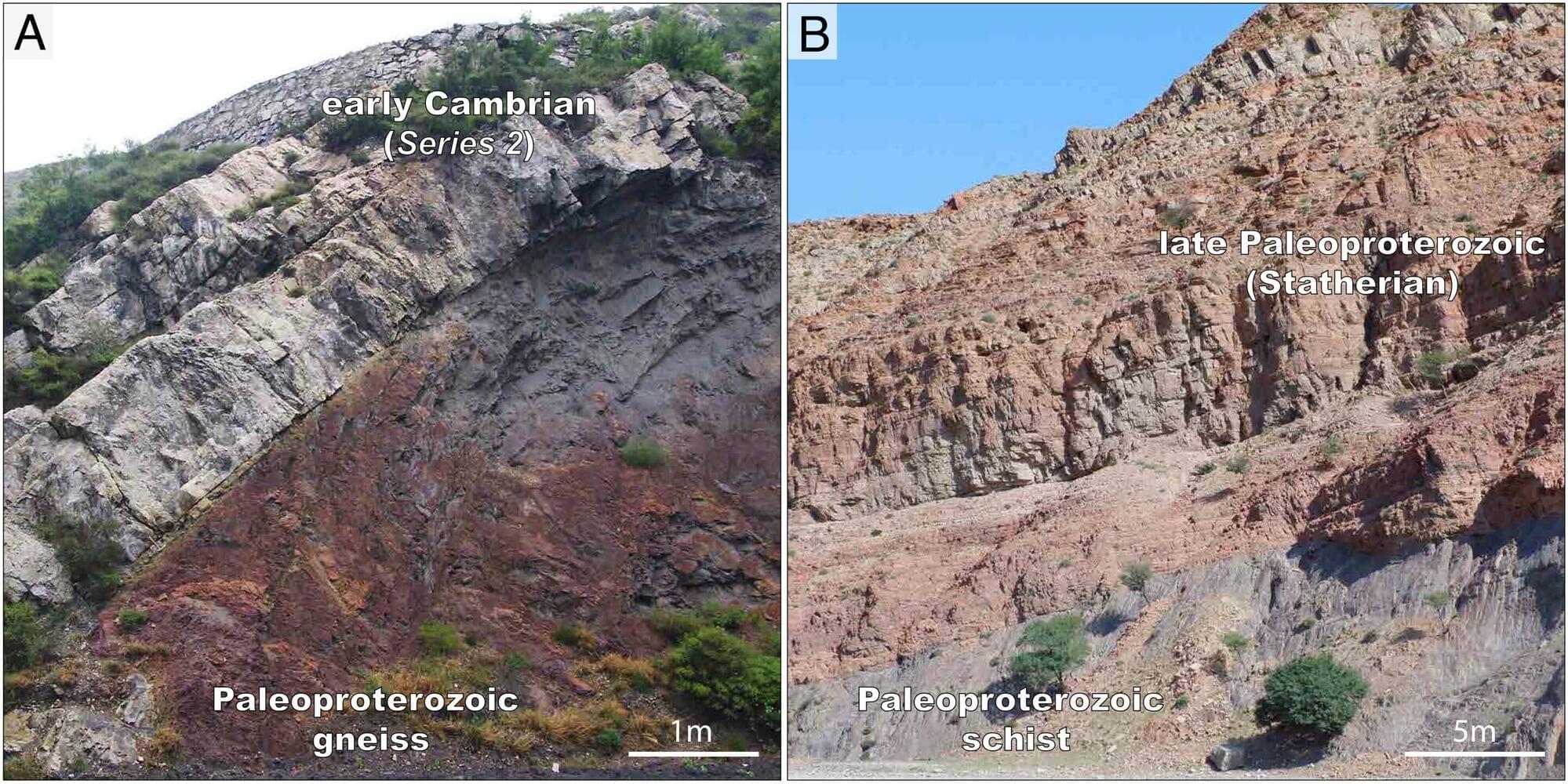
The Great Unconformity is a major gap in Earth’s geologic record. The missing layer between Precambrian and Cambrian rocks represents a gap of around a billion years of history. Among much debate surrounding the cause of the gap, a new study, published in the Proceedings of the National Academy of Sciences, indicates that the timing of the erosion leading to the Great Unconformity aligns with the assembly of the Columbia supercontinent, and that glaciation only contributed minimally.
The origin of the Great Unconformity is debated among geologists. Some believe evidence points to the ancient glaciation associated with “snowball Earth,” which occurred around 700 million years ago, is to blame. Others think tectonic processes associated with Columbia and Rodinia supercontinent cycles are the main cause.
The Great Unconformity was first recognized in the layers of the Grand Canyon, and many subsequent studies took place there to attempt to determine a cause. Those studies showed variable timing and mechanisms. The authors of the new study think that the evidence for Neoproterozoic-period snowball Earth glaciation causing the unconformity at such large scales is weak.

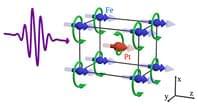
A century ago, Einstein and de Haas observed the transfer of spin angular momentum to mechanical rotation. It remains, however, unknown how the Einstein-de Haas effect operates at ultrafast timescales and atomic length scales. The authors use here time-dependent density functional theory combined with nuclear dynamics to investigate how ferromagnetic FePt reacts when irradiated by a femtosecond laser. They find that ultrafast loss of electronic spin angular momentum leads to generation of phonons carrying angular momentum, in a transfer process mediated by spin-orbit interaction.

we are thrilled to host Joscha Bach at Future Day 2026 – he is a leading voice in cognitive architectures and the founding director of the California Institute for Machine Consciousness. Bach’s talks are famous for being mind-bending journeys that challenge fundamental assumptions about reality and agency. In his upcoming session, he will dive into the Machine Consciousness Hypothesis, offering a glimpse into how we might one day create truly sentient digital minds.
Joscha Bach – The Machine Consciousness Hypothesis.
What if our consciousness is not a ‘thing’ we have, but a simulation our brain runs to make sense of itself?
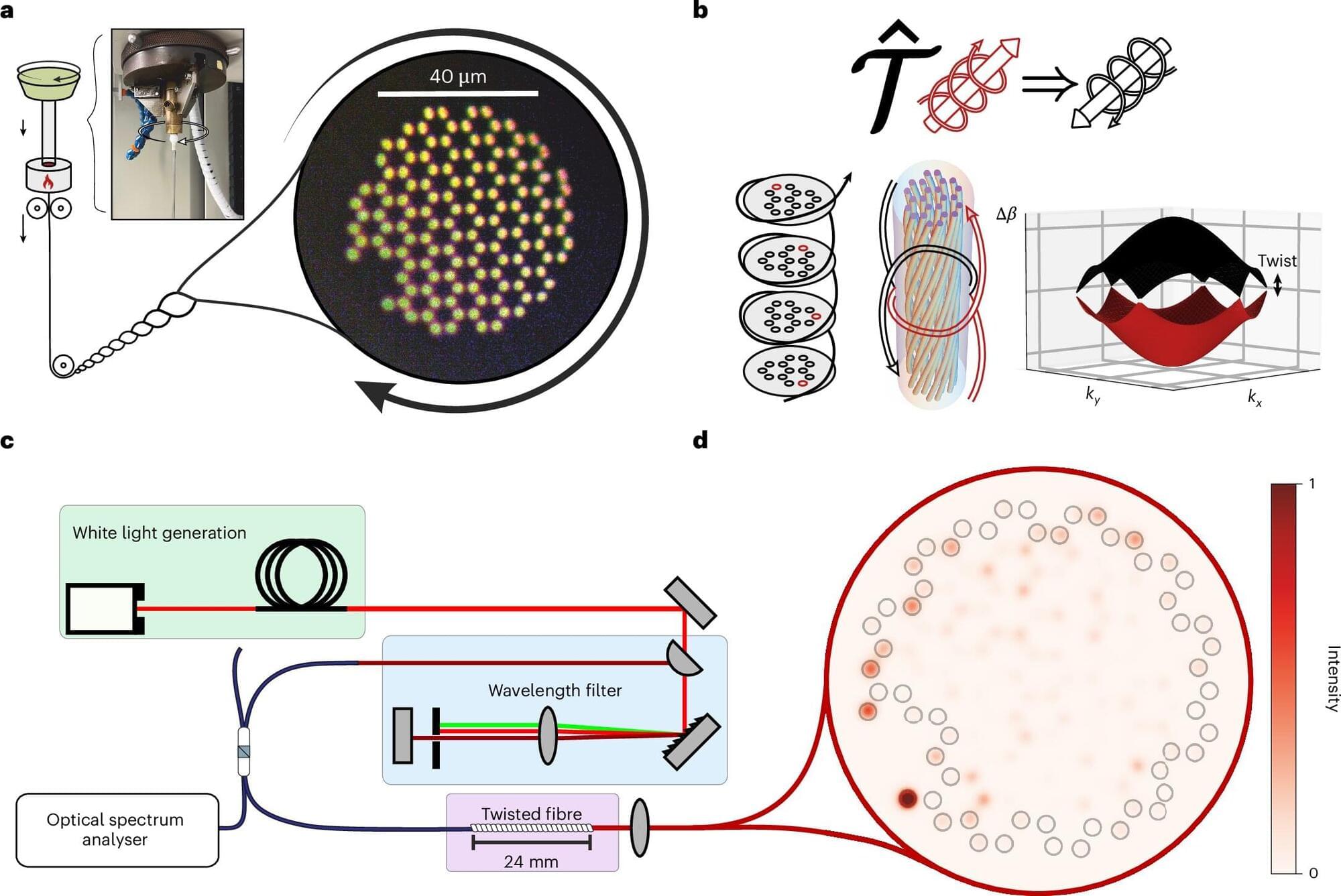
Light powers everything from communications to sensing, yet even tiny imperfections can scatter it and weaken signals. To address this, a team led by the University of Bath—working with the University of Cambridge and international partners—has developed a new structure that keeps light flowing smoothly even through bends, twists or damage, with the potential to operate over unprecedented distances.


Microsoft is investigating a known issue that causes the mouse pointer to disappear in the classic Outlook desktop email client for some users.
This bug has been acknowledged almost two months after the first reports started surfacing online, with users saying that Outlook became unusable after the mouse pointer vanished while using the app.
“My mouse just stopped being visible while I am using Outlook, and this is very, very, frustrating because my permission wasn’t given to make these changes, and now I can’t find anything, can’t open emails, can’t copy and paste, and the list goes on and on,” one customer noted.

An interesting paper evaluating the challenges faced by the existing generation of AAV vectors and proposing best practices for the future of AAVs in gene therapy. Useful tables of serotype, dose, and outcome are included. [ https://journals.asm.org/doi/10.1128/mbio.02957-25](https://journals.asm.org/doi/10.1128/mbio.02957-25)
Adeno-associated virus (AAV), discovered in 1965 (1), was considered a “biological oddity” and was dubbed as “almost a virus” (2), because it fails to undergo a productive replication in the absence of co-infection with a helper virus, such as adenovirus (3), herpesvirus (4), vaccinia virus (5), or human papillomavirus (6). Infection with the wild-type (WT) AAV infection is also not associated with any known disease in humans. However, following the availability of the complete nucleotide sequence of the WT AAV2 genome (7), molecular cloning (8, 9), and the demonstration of its remarkable ability to integrate site-specifically into human chromosome 19q13.3 (10, 11), sparked a significant interest in AAV, subsequently leading to the development of the first generation of recombinant AAV2 vectors (12, 13), followed by further refinements (14, 15).
Ever since then, interest in AAV vectors has continued to grow exponentially (16–19). The first generation of AAV vectors has been used in at least 700 programs, and there are over 200 currently active Phase I/II/III clinical trials for gene therapy of a wide variety of human diseases. Thus far, seven AAV “drugs”—Luxturna for Leber congenital amaurosis (20–22); Zolgensma for spinal muscular atrophy (23); Hemgenix for hemophilia B (24–27); Elevidys for Duchenne muscular dystrophy (28); Roctavian for hemophilia A (29–32); Beqvez for hemophilia B (33) (Beqvez has now been discontinued); and Kebilidi for aromatic L-amino acid decarboxylase deficiency (34, 35)—have been approved by the US Food and Drug Administration.