Instead, they trained the immune system to hunt down and destroy the cells that make the body age. Then they flooded the body with fresh stem cells to rebuild what was lost.
This isn’t science fiction. It’s longevity science happening right now.
Scientists at the University of California, Irvine’s School of Pharmacy & Pharmaceutical Sciences have discovered how muscle stem cells “flip a switch” to rebuild damaged muscle—a finding that could help address muscle loss linked to aging, injury and widely used weight-loss medications.
The study, published this week in Nature Metabolism, shows that muscle recovery is not just about protein or exercise. It depends on timing and how muscle cells use fuel.
Researchers learned that immediately after stress, muscle stem cells temporarily slow down energy production. Instead of burning glucose for energy, they reroute it into protective repair processes to produce antioxidants that reduce inflammation. Once repairs are complete, energy production ramps back up and new muscle fibers form and strengthen.
When it comes to health, some of our animal neighbors have extraordinary advantages. Ostriches, for example, are highly resistant to viruses, while sharks rarely develop cancer. And species like naked mole rats and bowhead whales live for astonishingly long periods of time, decades and centuries, respectively.
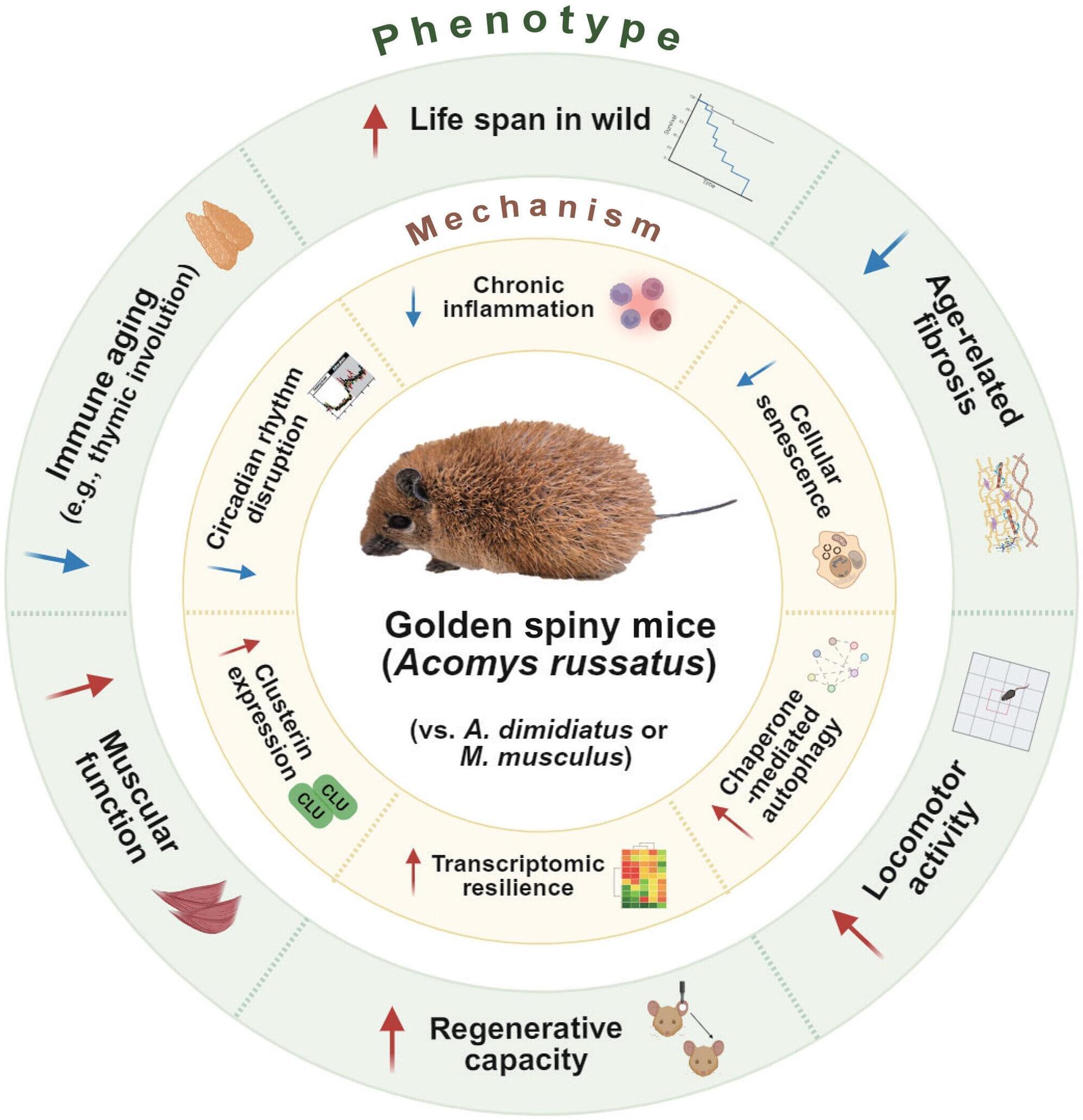
Researchers are now starting to understand why another species—the golden spiny mouse—seems to be unhindered by the negative health effects that typically accompany aging.
Reporting in Science Advances, researchers at Yale School of Medicine (YSM) have begun to uncover how this wild mouse, native to rocky deserts in the Middle East, resists physical, cognitive, and immunological decline while living six to seven times longer than other wild mice.
Cellular reprogramming is one of the technologies most associated with longevity. The field was created in 2006, when Shinya Yamanaka showed that a cocktail of four transcription factors, commonly known as OSKM, can cause de-differentiation and massive rejuvenation of a cell, creating an iPSC (induced pluripotent stem cell). About a decade later, partial reprogramming was demonstrated in vivo, where a more subtle application of the factors led to rejuvenation without compromising the cell’s identity.
Today, this field is maturing quickly, with its first clinical trials just around the corner. Academic teams and companies are working on dozens of directions and applications. We asked four experts, all involved in reprogramming-related biotech companies, to talk about their companies’ approaches and the opportunities and bottlenecks that the field faces and to offer predictions for the near and not-so-near future.
What I find most compelling about cellular reprogramming is that it revealed aging to be, at least in part, an actively maintained biological state rather than irreversible accumulation of damage. The discovery that somatic cells retain a latent capacity to reset their epigenetic and functional identity fundamentally changed how we think about cellular plasticity, identity, and time.
Groundbreaking research reveals senolytics combined with stem cells can double lifespan. This isn’t a small improvement; it’s a revolutionary leap in regenerative medicine, supporting a new paradigm. #Longevity #RegenerativeMedicine #StemCells #Senolytics #HealthTech @immortabio
Join us on Patreon! https://www.patreon.com/MichaelLustgartenPhD
Discount Links/Affiliates:
Blood testing (where I get the majority of my labs): https://www.ultalabtests.com/partners/michaellustgarten.
Blood testing with LifeExtension.com: https://www.anrdoezrs.net/click-101614996-15750394
At-Home Metabolomics: https://www.iollo.com?ref=michael-lustgarten.
Use Code: CONQUERAGING At Checkout.
Clearly Filtered Water Filter: https://get.aspr.app/SHoPY
Epigenetic, Telomere Testing: https://trudiagnostic.com/?irclickid=U-s3Ii2r7xyIU-LSYLyQdQ6…M0&irgwc=1
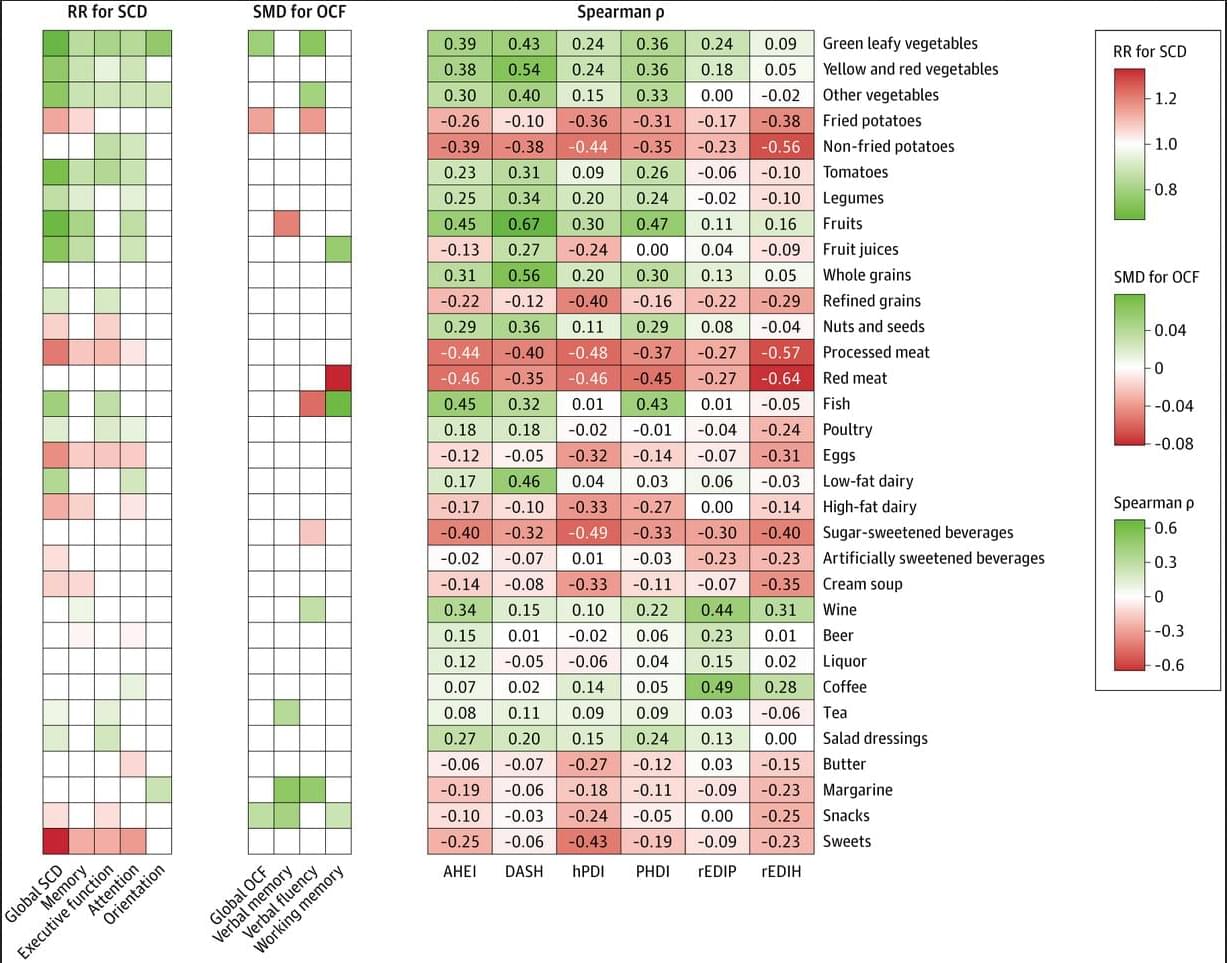
Greater adherence to the DASH diet, plant-based dietary patterns, or diets with lower hyperinsulinemia and inflammation was associated with lower risk of subjective cognitive decline and better cognitive function in adults.
Question Are healthy dietary patterns associated with lower risk of subjective cognitive decline and better objectively measured cognitive function?
Findings In this cohort study performing a systematic evaluation of 6 dietary patterns among 159 347 participants, greater adherence to a healthy diet, exemplified by the Dietary Approaches to Stop Hypertension (DASH) diet, was associated with lower risk of subjective cognitive decline and better objectively measured cognitive function. The associations were most pronounced when the diet was followed during midadulthood (ages 45–54 years).
Meaning Results suggest that a healthy diet, such as the DASH diet, was associated with early indicators of cognitive aging, which underscores the importance of a healthy diet for maintaining long-term cognitive health.
Immorta Bio just doubled the lifespan of mice using a first-in-class senolytic immunotherapy called SenoVax combined with personalized stem cells from their StemCellRevivify platform. In this deep dive, I break down exactly how it works, why it matters, and what it means for the future of human aging.
SenoVax is a vaccine that trains your immune system to hunt down and destroy senescent cells — the \.