Toggle light / dark theme

Structures of hantavirus glycoprotein tetramers

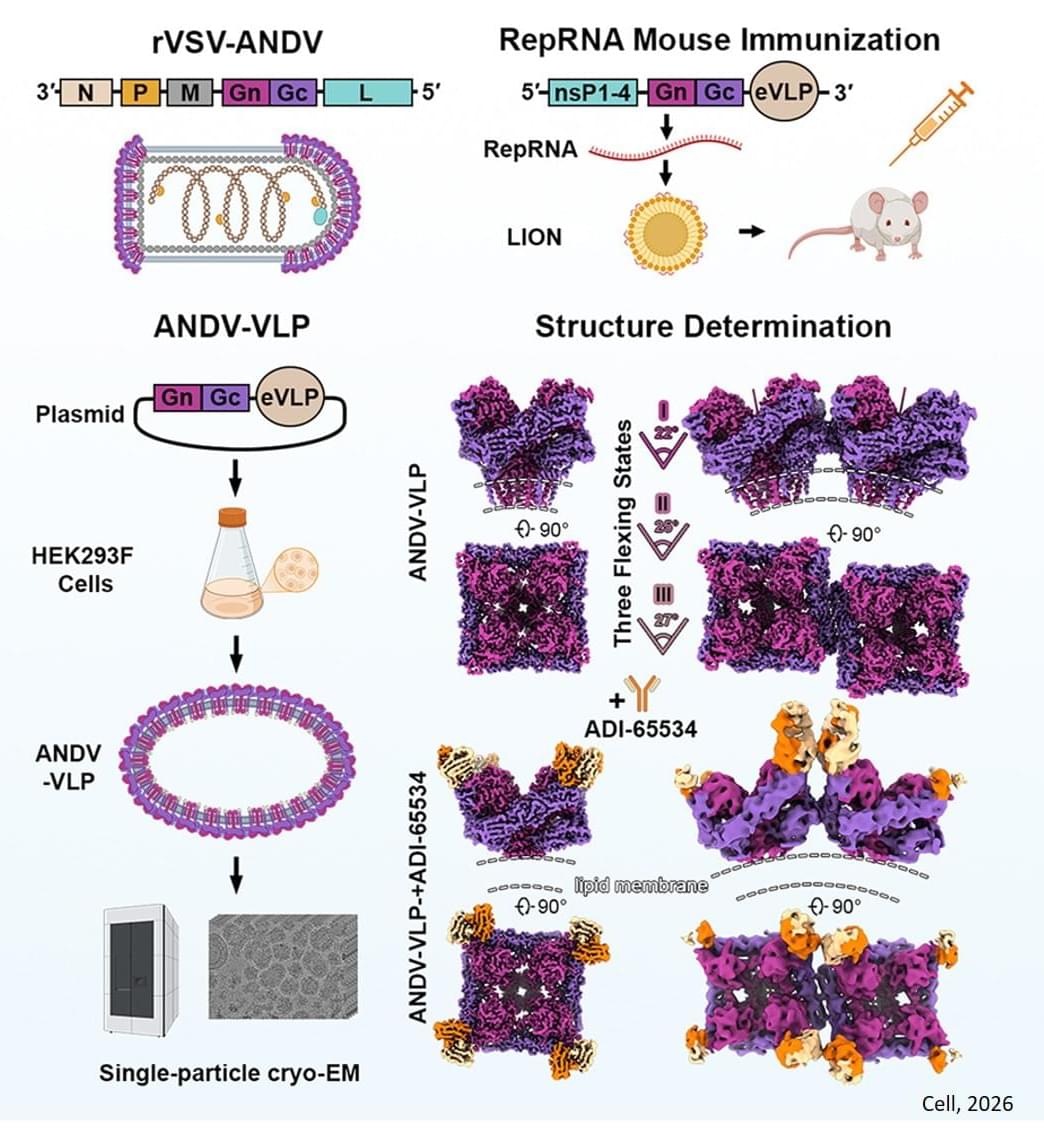
This surface protein complex for the Andes virus is a mushroom-shaped structure called a Gn-Gc tetramer. To map the 3D structures, the team first produced virus-like particles that mimic a real virus, but without the genome that makes a virus infectious. They then used a cryo-electron microscope—which shines an electron beam through a frozen sample and detects the shadows created by molecules—to reconstruct the three-dimensional structures of the Gn-Gc tetramers on the surface of the virus-like particles.

But there was a twist: To obtain extremely high-resolution structures, the researchers painstakingly identified and isolated shadows from only the tetramers that were pointing sidewise relative to the electron beam and ignored those pointing in other directions. This allowed them to borrow a reconstruction method typically used on individual proteins.

The resulting structures have an extremely high resolution of 2.3 angstroms, meaning details the size of just a couple of atoms were effectively captured. That’s enough to represent a transformational improvement over another team’s model of the tetramer from a few years ago, at a resolution of 12 angstroms, still tiny but large enough to produce some key inaccuracies – ones effectively corrected with the newer method and resulting structure.

These latest structures show the Gn-Gc tetramer in a particular state before it has infected a cell. For vaccines or antibody therapies to be most effective against a hantavirus, mimicking surface proteins at this pre-infection stage is essential. ScienceMission sciencenewshighlights.


Hantaviruses, transmitted from rodents to people, have a death rate approaching 40%. They’re found around the world, and because there are no approved vaccines or treatments, they’re among the pathogens of highest concern for future pandemics. They made news in the United States last year when Betsy Arakawa, the wife of actor Gene Hackman, died from a hantavirus infection in New Mexico in March.

New findings published in the journal Cell about the Andes virus, a hantavirus endemic to the southwestern U.S. and other parts of North and South America, represent a crucial first step towards much-needed vaccines and antibody therapies for this and other hantaviruses.
How close are we to true AI?

Understanding consciousness is the ultimate prize for creators of artificial intelligence. Nevertheless, consciousness theory will also shape how we view ourselves and our place in the world. Although AI systems can mimic human reasoning, they can only regurgitate the input data. They are sophisticated pattern recognizers and content remixers, but cannot step beyond the limitations of the input. Understanding consciousness would enable us to transition from synthetic to synthesis, unlocking unlimited potential.

Computer scientists hope that recurrent computation will somehow ‘awaken’ code to consciousness. Yet the spectacular achievements of large language and diffusion models have not moved beyond imitation. We train models on the outputs of consciousness—our language, our art, our logic—while remaining entirely ignorant of the process that produces them. An AI can write a gut-wrenching paragraph about sadness by replicating patterns, vocabulary, and syntax. But it knows nothing of grief. It can create a shadow play, yet knows nothing of the object that casts it. This imitation, while impressive, should not be mistaken for a proper understanding of consciousness. No amount of coloring can turn the shadow into a solid object.

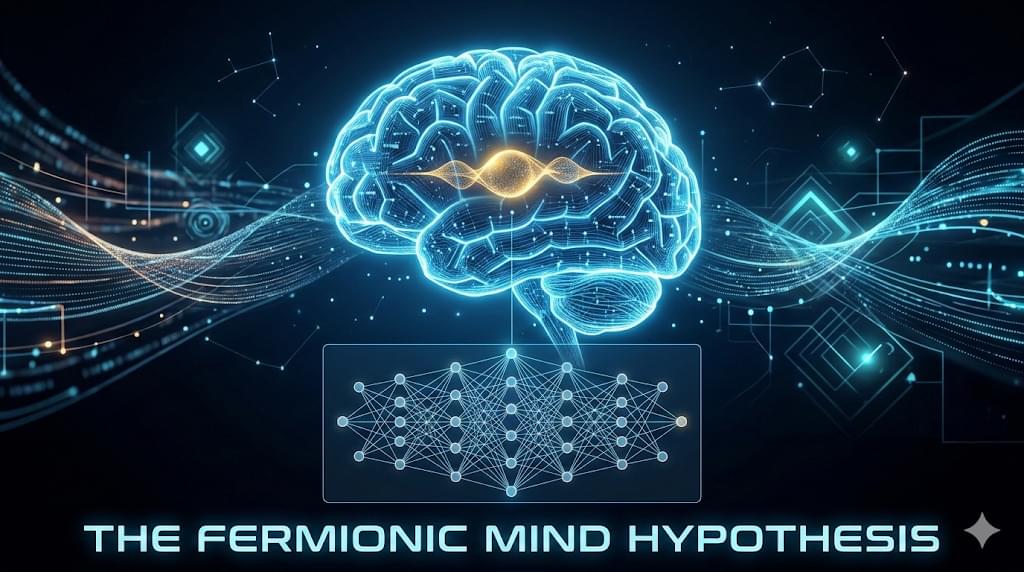
To reverse-engineer the mind, we need a blueprint. The pressing need to advance AI is a physicalist theory of consciousness, the architecture of subjective experience itself. The Fermionic Mind Hypothesis (FMH) is such a physicalist framework. It posits that selfhood is structurally and functionally analogous to a fermion in physics. The self’s persistent core operates as an energy-regulating system, maintaining mental equilibrium through continuous thermodynamic cycles. Within this cycle, cognitive processes such as decision-making are wave-particle transitions that capture the inherent nondeterminism and contextual collapse of probabilistic mental states.

Simulations show a path to ‘ideal glass’ with crystal-like entropy

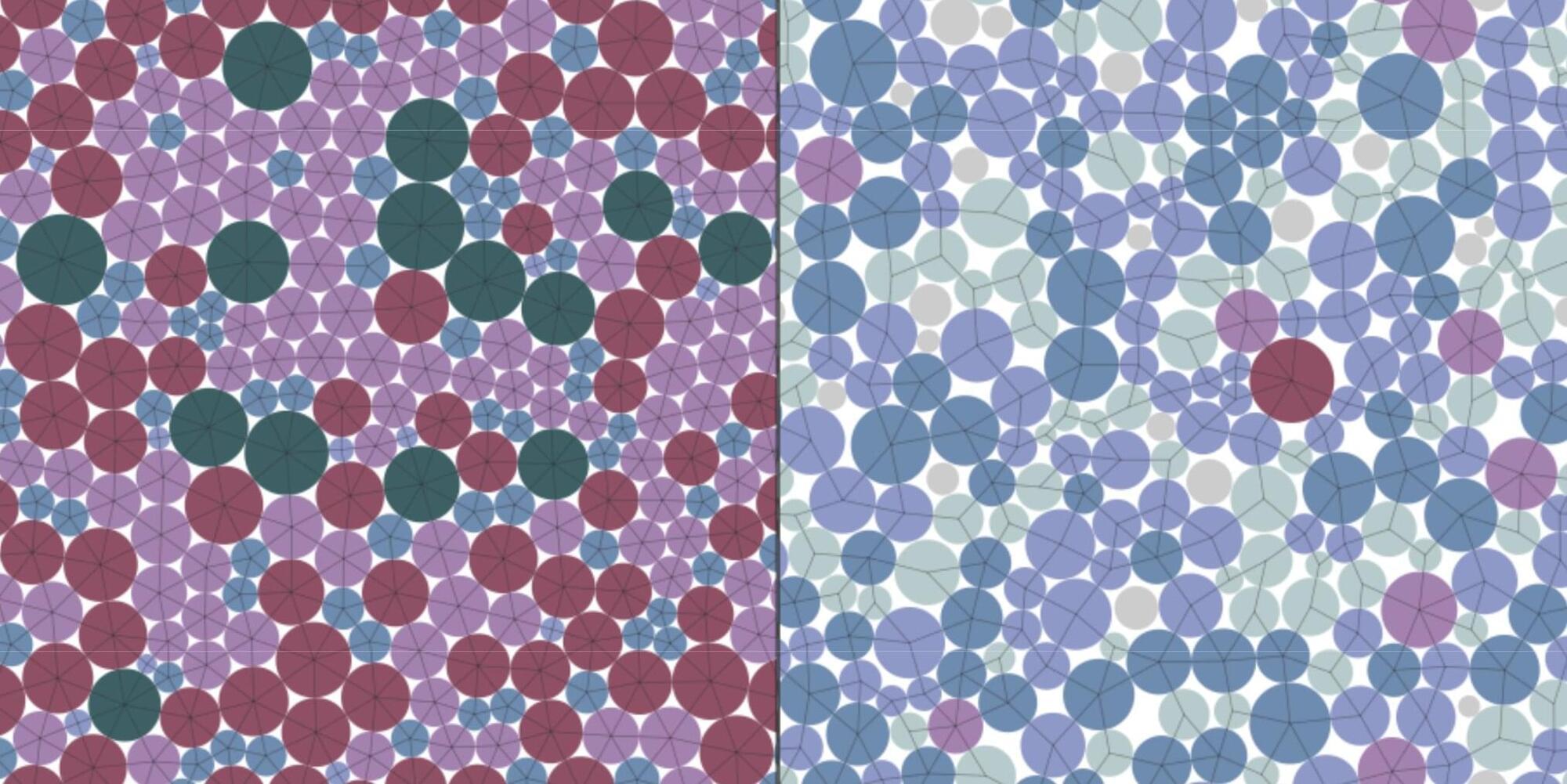
The types of glass that we encounter in everyday life, such as window glass or smartphone screens, are disordered solids. This means that they consist of particles locked in place, like those in solids, but arranged randomly, similarly to how they would be in a liquid.

Almost a century ago, Walter Kauzmann, who was a chemistry professor at Princeton University at the time, was confronted with the possible existence of a so-called ideal glass, an amorphous system with the entropy of a crystal. This is a glass in which particles are still arranged randomly, but the particles fill space so efficiently that there is only one possible arrangement, as opposed to the many disordered arrangements of conventional glass.

Kauzmann’s theoretical proposals inspired numerous other physicists to explore the idea of this perfectly equilibrated glass. Previous studies suggested that this elusive state could not be reached using conventional cooling processes.

Why numbers are more real than atoms (Part 1) Mathematical Realism

Like the mathematical universe.


This video about mathematical realism will probably not benefit you in any way. Enjoy. 1) What are numbers? 2) Why Hume’s understanding of mathematics is incorrect. 3) Why Plato’s understanding of mathematics is probably incorrect. 4) Why the common sense view of mathematics is probably incorrect. See second video for more.

JWST Just Found Something That Shocked Scientists

The release of the 2026 dark matter map marks a definitive shift in how we approach the cosmos. For decades, we were in the hunting phase, trying to prove that dark matter existed and attempting to catch a single particle in a laboratory. While we still haven’t touched a dark matter particle, we have moved into the surveying phase. We are no longer asking if it is there; we are busy measuring its dimensions, its density, and its influence on the growth of everything we can see. This map of the Sextans field is essentially the first page in a new atlas of the invisible universe.

▀▀▀▀▀▀
Timestamps:
0:00 Dark Matter.
1:05 The Cosmic Lens.
4:20 The COSMOS-Web Survey.
7:15 Mapping the Filaments.
10:22 Beyond the Standard Model.
13:15 The Architect of Life.

▀▀▀▀▀▀
Fexl Spanish: / @fexl_es.
Fexl Portuguese: / @fexlpt.
Fexl Ukraine: / @fexl_ua.

▀▀▀▀▀▀
References:
Nature Astronomy (January 2026): An ultra-high-resolution map of (dark) matter: https://www.nature.com/articles/s4155… Pre-print (Technical Breakdown): COSMOS-Web: The ultra-deep weak lensing survey: https://arxiv.org/abs/2601.17239 NASA Webb Mission Page: Webb Unveils the Dark Matter Scaffolding of the Universe: https://www.nasa.gov/missions/webb/na… COSMOS-Web Collaboration Official Site: https://cosmos.astro.caltech.edu/ NASA JPL Press Release: Seeing the Unseen: 800,000 Galaxies Mapped: https://www.jpl.nasa.gov/news/nasa-re… #fexl #space #jwst.

ArXiv Pre-print (Technical Breakdown): COSMOS-Web: The ultra-deep weak lensing survey: https://arxiv.org/abs/2601.

Beam-spin asymmetry study puts proton models to the test

Getting an up-close view of life at the cellular level can be as simple as placing onion skin under a microscope and adjusting the knobs. Peering deeper, into the heart of the atoms within, isn’t as easy. It requires peeling through layers of particle accelerator data to shed light on protons, neutrons and the subatomic processes at play.

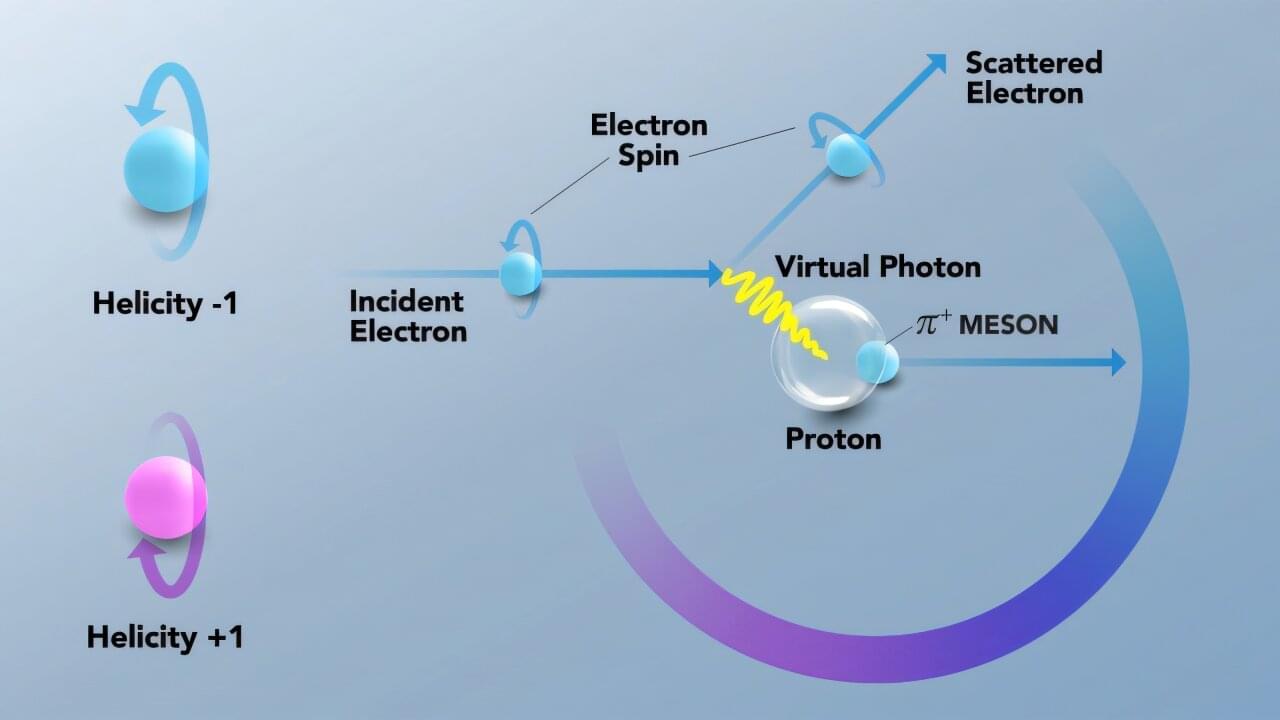
This type of zoom doesn’t use a lens. Clarity is achieved by blending ultrafine physics measurements and theoretical predictions. Now, the first results from the KaonLT experiment at the U.S. Department of Energy’s Thomas Jefferson National Accelerator Facility are adding a new level of detail in the quest to map out how the components of atomic nuclei are put together.

The study, published in the journal Physics Letters B, focuses on producing short-lived particles called mesons, which can provide important information about the particles and forces that form the proton.

Matching vibrations is all it takes to shut down superconductivity in a nearby crystal

The world is never really at rest. Even in a vacuum near ultracold temperatures where all classical motion should come to a halt, you’ll find quantum fluctuations. In thin, two-dimensional materials, these include random vibrations that can alter electromagnetic fields, a feature that theorists have posited could be quite useful for modifying materials.

“It’s a holy grail we’ve been searching for decades,” said Dmitri Basov, Higgins Professor of Physics at Columbia. “We believe we’ve found it.”

In a new paper published in Nature, Basov and 32 collaborators from 17 institutions came together to confirm that quantum fluctuations alone from the vacuum inside atom-thin layers of 2D materials can alter the properties of a larger nearby crystal—a theoretical possibility now experimentally realized for the first time.

New technique spots hidden defects to boost reliability of ultrathin electronics

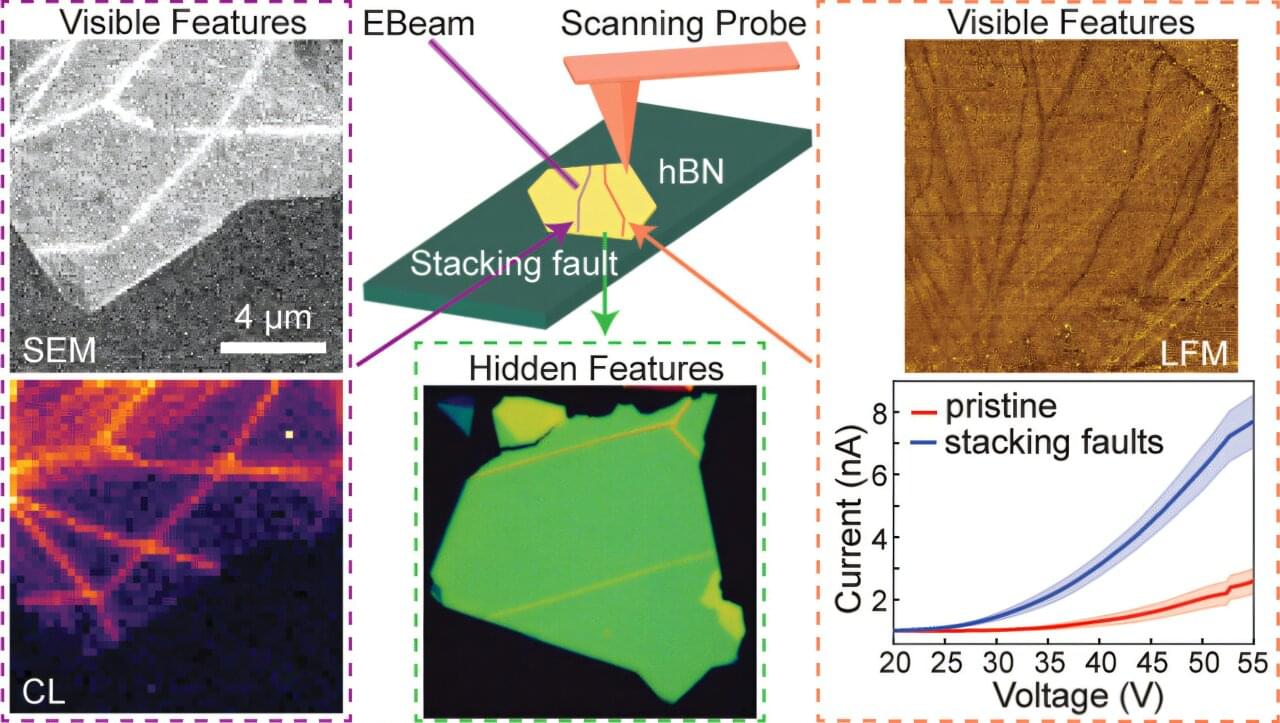
Future devices will continue to probe the frontier of the very small, and at scales where functionality depends on mere atoms, even the tiniest flaw matters. Researchers at Rice University have shown that hard-to-spot defects in a widely used two-dimensional insulator can trap electrical charges and locally weaken the material, making it more likely to fail at lower voltages. The findings are published in Nano Letters.

“By showing practical ways to detect when and where these defects form, we help make future devices more reliable and repeatable,” said Hae Yeon Lee, an assistant professor of materials science and nanoengineering at Rice, who is a corresponding author on the study.

Building ultrathin electronics such as advanced transistors, photodetectors and quantum devices involves stacking sheets of different 2D materials on top of each other into “heterostructures.” Hexagonal boron nitride (hBN), prized for being atomically flat and chemically stable, is a common building block.

/* */