Measuring conditions in volatile clouds of superheated gases known as plasmas is central to pursuing greater scientific understanding of how stars, nuclear detonations and fusion energy work. For decades, scientists have relied on a technique called Thomson scattering, which uses a single laser beam to scatter from plasma waves as a way to measure critical information such as plasma temperature, density and flow.
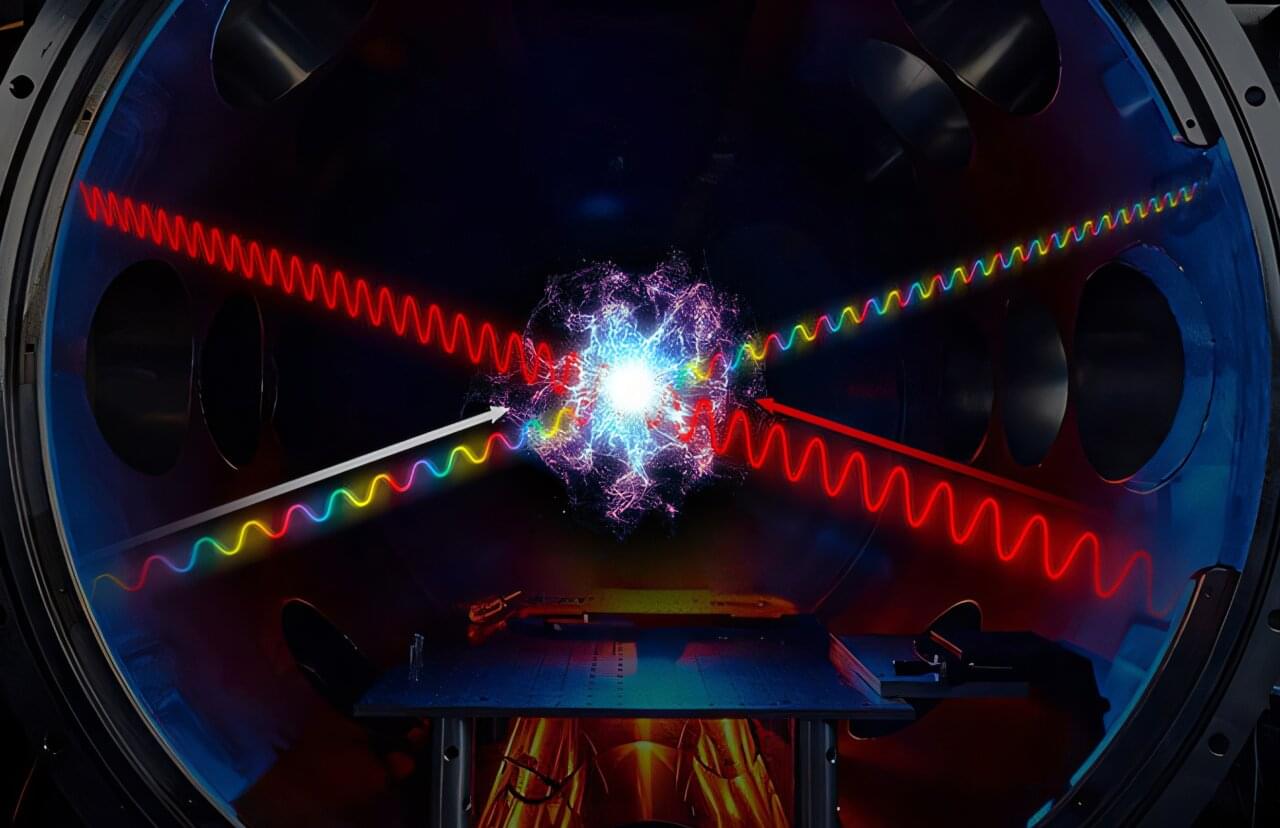
Now, however, a multidisciplinary team of Lawrence Livermore National Laboratory (LLNL) researchers has successfully demonstrated a potentially simpler, more accurate way to measure plasma conditions with two laser beams that cross paths, creating a data signal that is about a billion times stronger than what is available from the Thomson scattering method.
This method could give physicists working on complex high energy density science and inertial confinement fusion (ICF) research at facilities like LLNL’s National Ignition Facility (NIF) an innovative new tool.
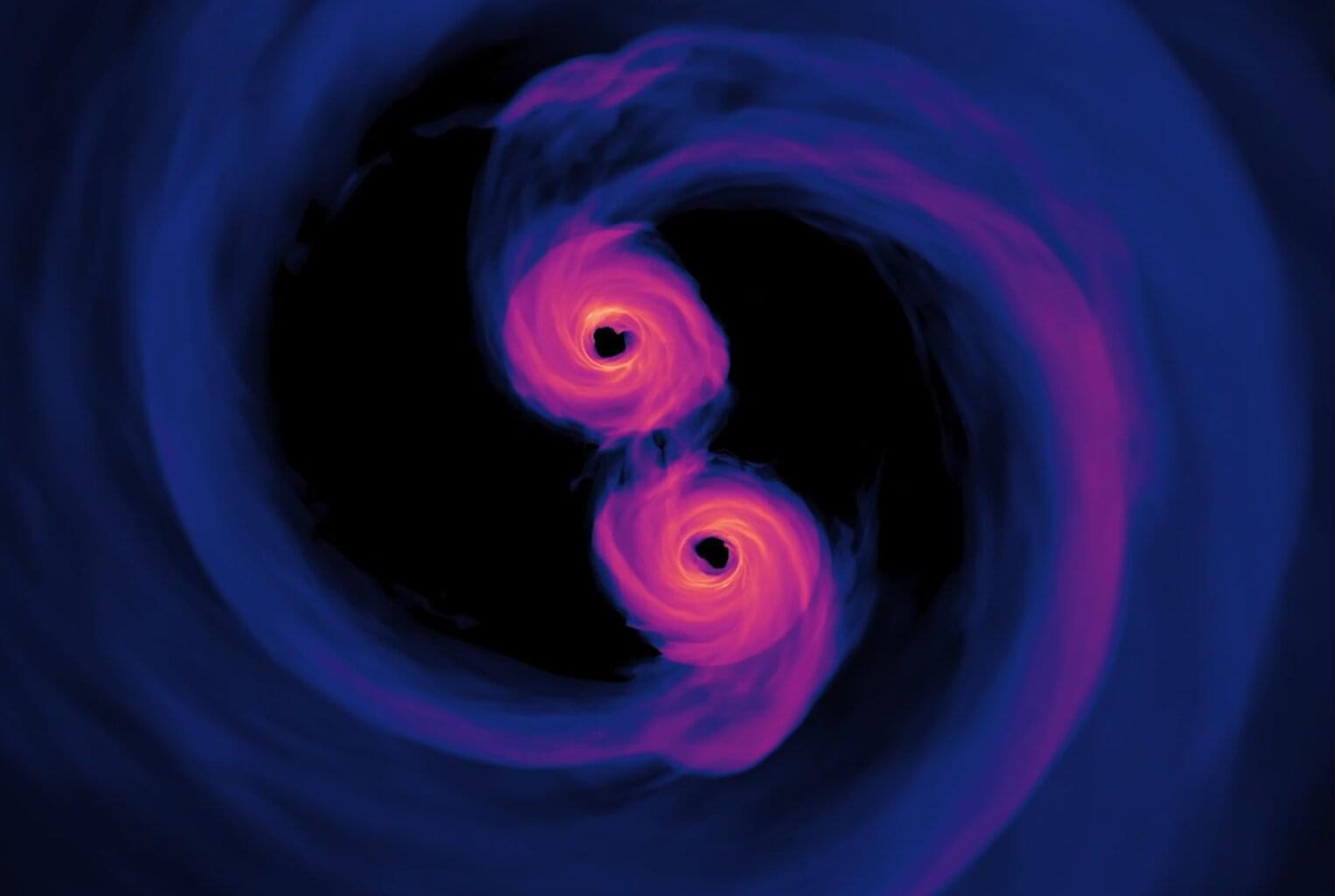
An international collaboration of astrophysicists that includes researchers from Yale has created and tested a detection system that uses gravitational waves to map out the locations of merging black holes—known as supermassive black hole binaries—around the universe. Such a map would provide a vital new way to explore and understand astronomy and physics, just as X-rays and radio waves did in earlier eras, the researchers say. The new protocol demonstrated by the North American Nanohertz Observatory for Gravitational Waves (NANOGrav) offers a detection protocol to populate the map.
“Our finding provides the scientific community with the first concrete benchmarks for developing and testing detection protocols for individual, continuous gravitational wave sources,” said Chiara Mingarelli, assistant professor of physics in Yale’s Faculty of Arts and Sciences (FAS), member of NANOGrav, and corresponding author of a new study published in The Astrophysical Journal Letters.
According to the researchers, even a small number of confirmed black hole binaries will enable them to anchor a map of the gravitational wave background. In the months ahead, NANOGrav will continue identifying and locating binaries.
How Elon plans to launch a terawatt of GPUs into space.
## Elon Musk plans to launch a massive computing power of 1 terawatt of GPUs into space to advance AI, robotics, and make humanity multi-planetary, while ensuring responsible use and production. ## ## Questions to inspire discussion.
Space-Based AI Infrastructure.
Q: When will space-based data centers become economically superior to Earth-based ones? A: Space data centers will be the most economically compelling option in 30–36 months due to 5x more effective solar power (no batteries needed) and regulatory advantages in scaling compared to Earth.
☀️ Q: How much cheaper is space solar compared to ground solar? A: Space solar is 10x cheaper than ground solar because it requires no batteries and is 5x more effective, while Earth scaling faces tariffs and land/permit issues.
Q: What solar production capacity are SpaceX and Tesla planning? A: SpaceX and Tesla plan to produce 100 GW/year of solar cells for space, manufacturing from raw materials to finished cells in-house.
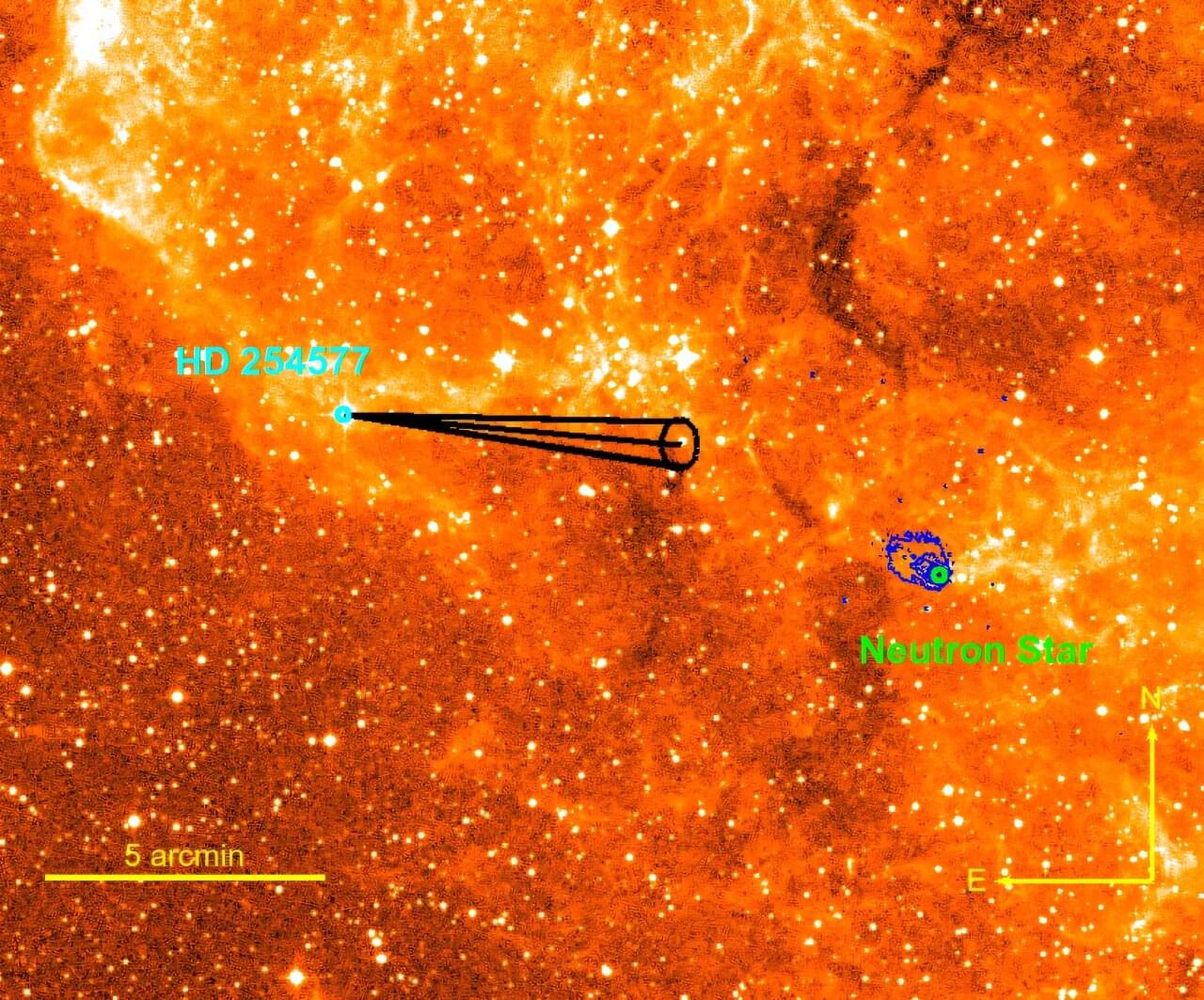
Astronomers have strengthened long-standing predictions that massive runaway stars could have originated in binary pairs, and were dramatically ejected into space when their companion stars underwent supernova explosions. Through a combination of observations and stellar models, a team led by Baha Dinçel at the University of Jena in Germany revealed that the star HD 254577 likely did just this—and that its origins can be tied back to a companion whose remnants now form the Jellyfish nebula. The research is published in Astronomy & Astrophysics.
Physicists have uncovered surprising order inside one of the most puzzling states in modern materials science. It is a strange middle ground where electrons begin to behave differently, but full superconductivity has not yet taken hold.
Instead of falling into disorder, the system retains coordinated patterns right at the point where normal electrical behavior starts to break down. The finding suggests this transition is guided by an underlying structure, not randomness.
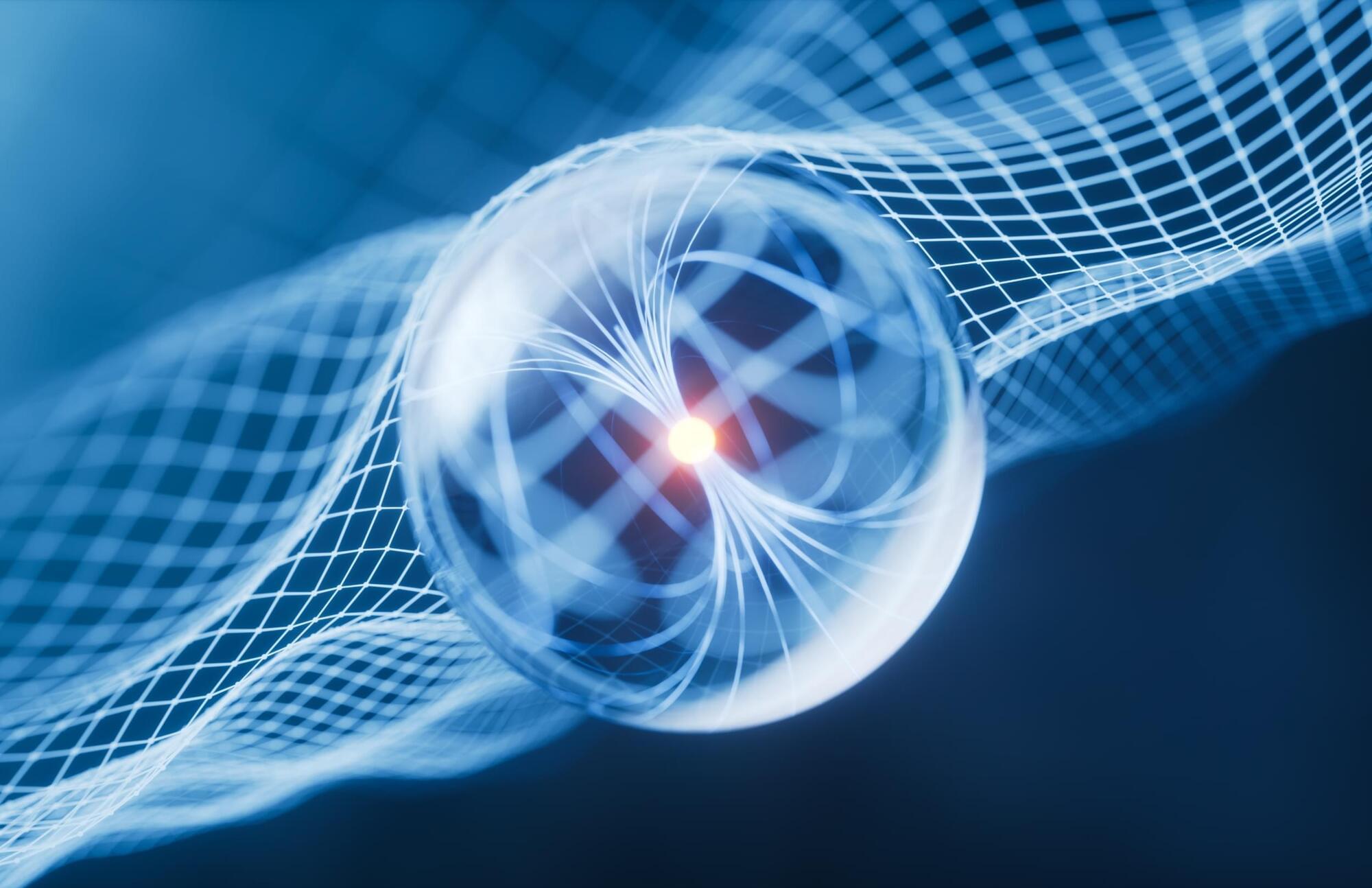
Scientists say a real warp drive may no longer be pure science fiction, thanks to new breakthroughs in theoretical physics. Recent studies suggest space itself could be compressed and expanded, allowing faster-than-light travel without breaking known laws of physics. Unlike sci-fi engines, this concept wouldn’t move a ship through space — it would move space around the ship. Researchers are now exploring how energy, gravity, and exotic matter could make this possible. In this video, we explain how a warp drive could work and how close science really is.
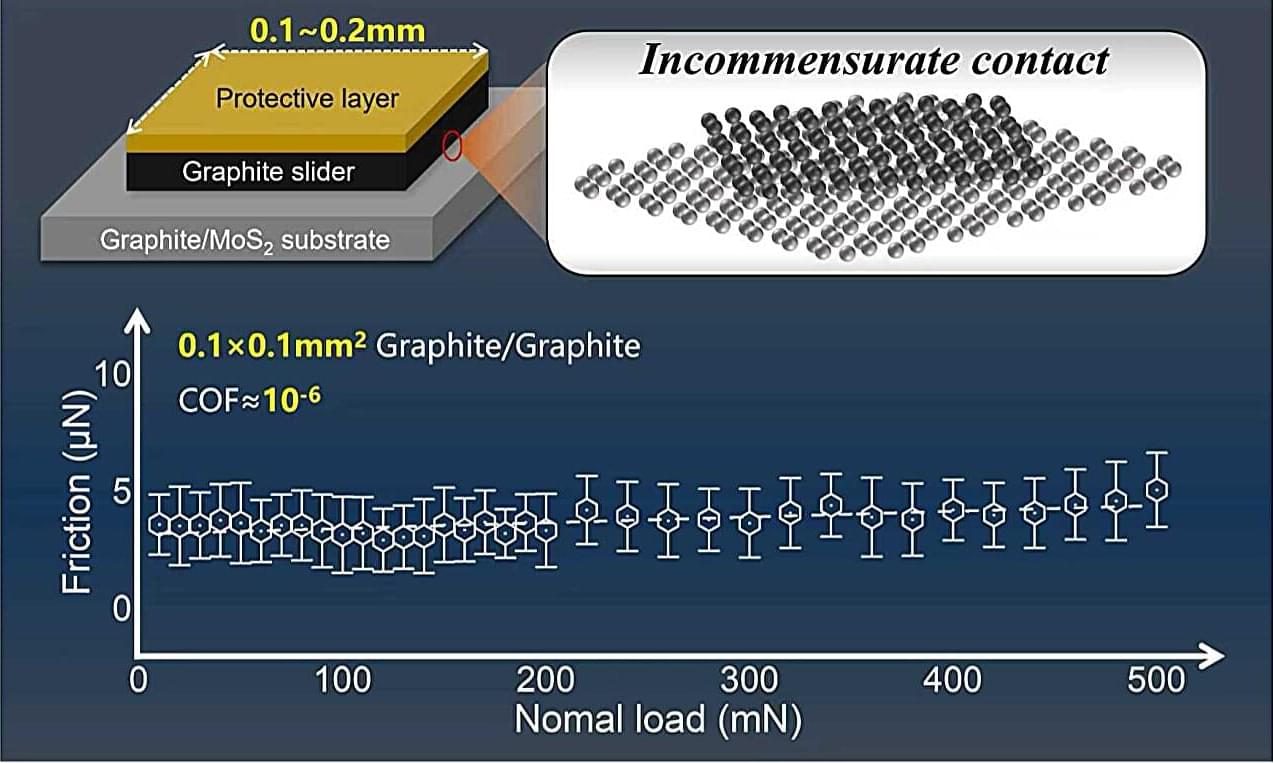
For the first time, physicists in China have virtually eliminated the friction felt between two surfaces at scales visible to the naked eye. In demonstrating “structural superlubricity,” the team, led by Quanshui Zheng at Tsinghua University, have resolved a long-standing debate surrounding the possibility of the effect. Published in Physical Review Letters, the result could potentially lead to promising new advances in engineering.
When two objects slide over each other, any roughness on their surfaces will almost inevitably resist the motion, creating the force of friction. Yet in 2004, physicists showed that friction can be virtually eliminated between two graphite surfaces, simply by rotating their respective molecular structures.
Named structural superlubricity (SSL), the effect is highly desired by engineers; in principle, allowing them to eliminate wear on both surfaces and minimize energy lost as waste heat.
Calculations show how the mysterious “magic numbers” that stabilize nuclear structures emerge naturally from nuclear forces—once these are described with appropriate spatial resolution.
Atomic nuclei have been studied for over a century, yet some of nuclear physics’ most basic questions remain unanswered: How many bound combinations of protons and neutrons, or isotopes, can exist? Where do the limits of nuclear existence lie? How are chemical elements synthetized in the Universe? Clues to solving these puzzles lie in the vast phenomenology of nuclear structure—the measured properties of tens of thousands of nuclear states, their decays, and their reactions. In this bedlam of information, patterns and irregularities in data provide crucial hints. One such irregularity was spotted as early as 1934 [1]: Nuclei containing specific numbers of protons and neutrons (2, 8, 20, 28, 50, 82…) are unexpectedly stable. These “magic numbers” (Fig.
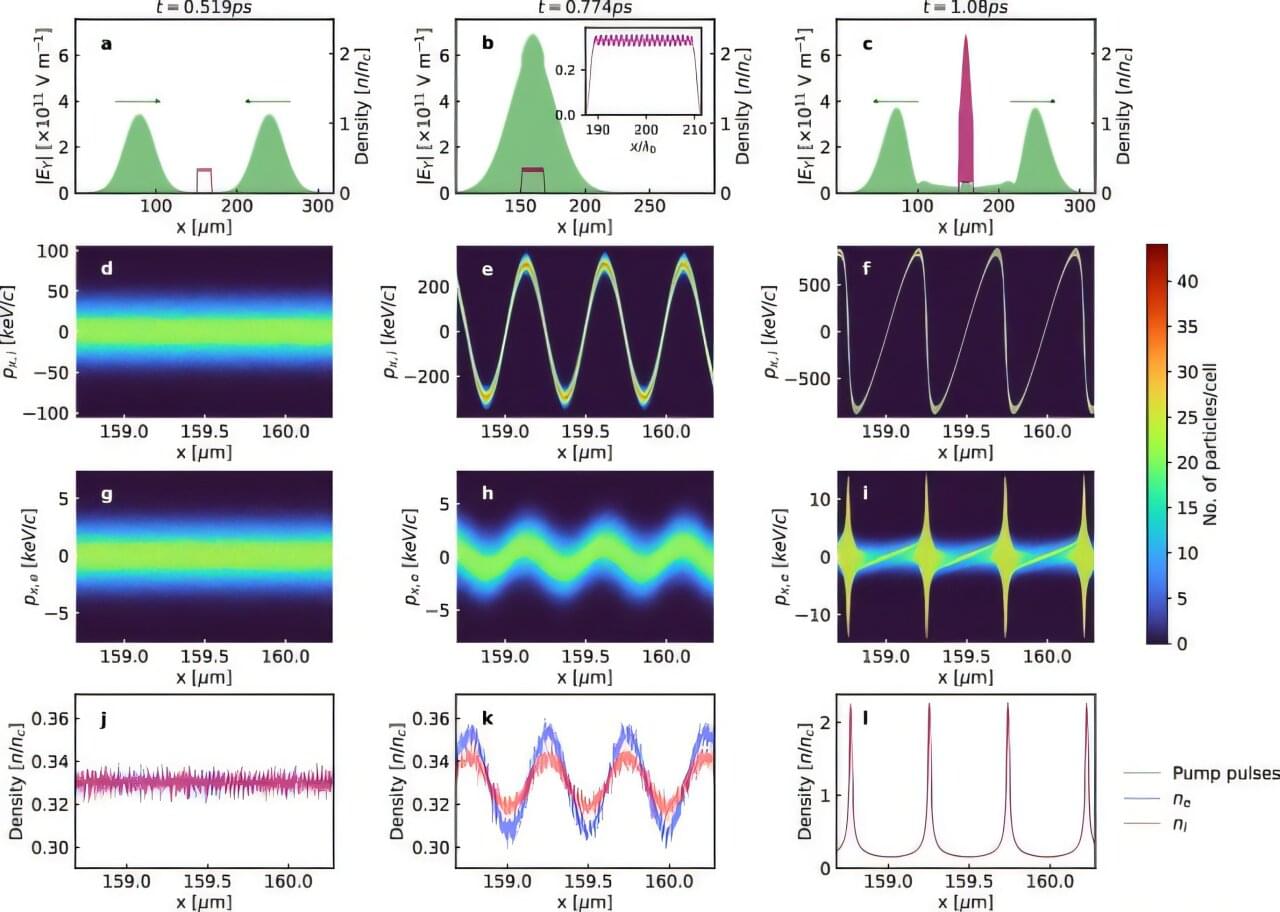
Plasma mirrors capable of withstanding the intensity of powerful lasers are being designed through an emerging machine learning framework. Researchers in Physics and Computer Science at the University of Strathclyde have pooled their knowledge of lasers and artificial intelligence to produce a technology that can dramatically reduce the time it takes to design advanced optical components for lasers—and could pave the way for new discoveries in science.
High-power lasers can be used to develop tools for health care, manufacturing and nuclear fusion. However, these are becoming large and expensive due to the size of their optical components, which is currently necessary to keep the laser beam intensity low enough not to damage them. As the peak power of lasers increases, the diameters of mirrors and other optical components will need to rise from approximately one meter to more than 10 meters. These would weigh several tons, making them difficult and expensive to manufacture.
Many fans expected Valve to announce Half-Life 3 in 2025, and Gabe Follower believes the news was delayed, which was the reason the second edition of Half-Life 2: Raising the Bar was postponed: he thinks the book will be out once the game is revealed.
For now, we can get glimpses of HL3 features in the updates to Valve’s Source 2 engine. Based on mentions of HLX in the code, Gabe Follower says that the game will offer dynamic physics and gravitational anomalies, where gravity no longer pulls objects in one direction but can be tied to a point, making objects’ gravitational pulls affect each other.
Characters will now have more accurate hitboxes that adjust to their limbs instead of simple boxes.