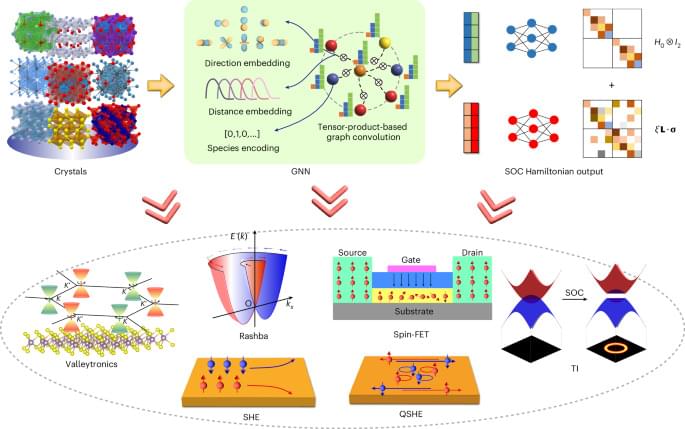
Zhong et al. introduce Uni-HamGNN, a graph neural network model that predicts spin–orbit-coupled electronic structures quickly and accurately, enabling fast screening and the discovery of advanced quantum materials across the periodic table.
And exploration of what may be the The Coming Age of Alien Communications, and how quantum computers and AI might alter the course of how that might unfold.
My Patreon Page:
/ johnmichaelgodier.
My Event Horizon Channel:
/ eventhorizonshow.
Papers:
Read “” by James P. Kowall on Medium.
Watch this very interesting video in which Roger Penrose argues that Consciousness is fundamental and came first before it created the universe through a process of observation that turns potentiality into actuality:
For 400 years, we’ve believed that mindless matter eventually evolved into conscious minds. But what if we have the causation completely backwards? What if consciousness is the precondition for the universe?
In this video, we dive deep into the quantum paradox, wave function collapse, and the radical scientific theory that consciousness isn’t an accident of evolution — it’s the fundamental building block of reality itself. From the Copenhagen interpretation to the mysteries of the biological brain, we explore how quantum mechanics suggests the physical world is simply what appears when consciousness observes itself.
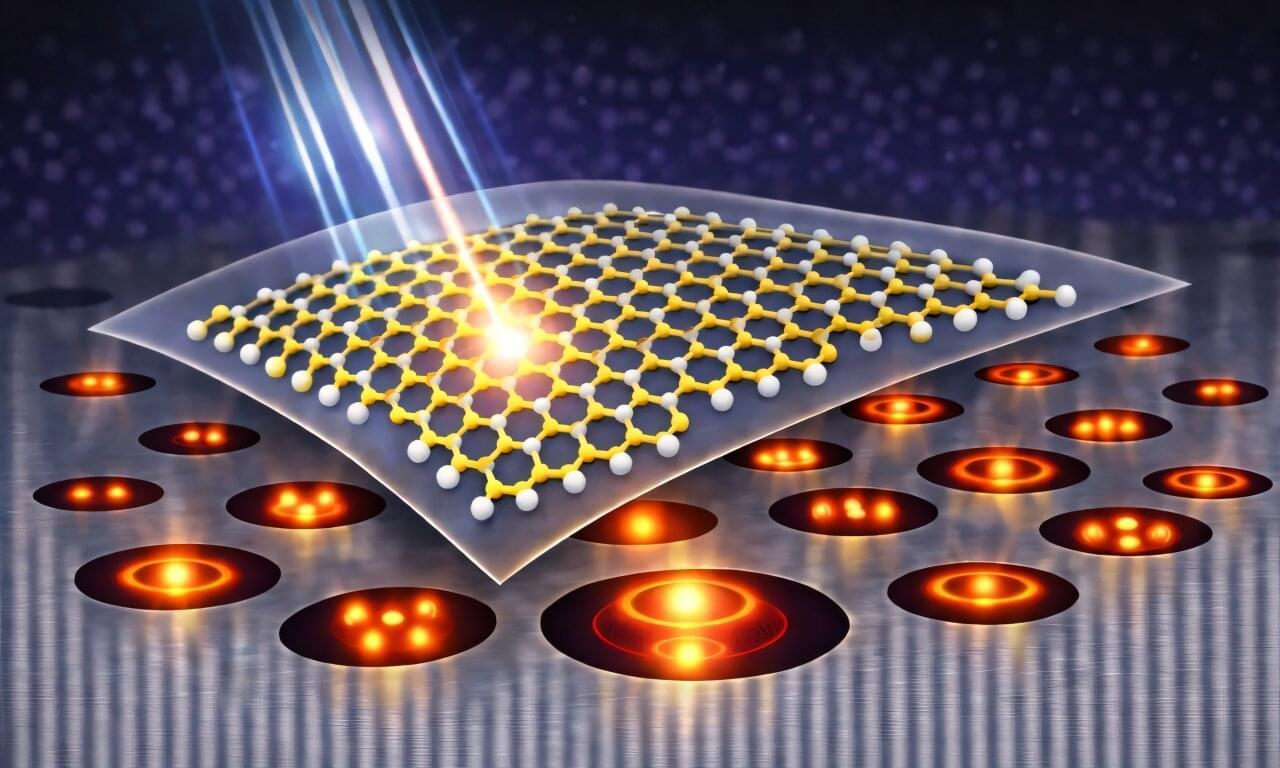
Atomically thin semiconductors such as tungsten disulfide (WS2) are promising materials for future photonic technologies. Despite being only a single layer of atoms thick, they host tightly bound excitons—pairs of electrons and holes that interact strongly with light—and can efficiently generate new colors of light through nonlinear optical processes such as second-harmonic generation.
These properties make them attractive for quantum optics, sensing, and on-chip light sources. At the same time, their extreme thinness imposes a basic limitation: There is very little material for light to interact with. As a result, emission and frequency conversion are often weak unless the surrounding photonic environment is carefully engineered.
A study published in Advanced Photonics introduces a new way to address this challenge by reshaping not the two-dimensional material itself, but the space beneath it. The researchers demonstrate a hybrid platform in which a monolayer of WS2 is placed on top of nanoscale air cavities, known as Mie voids, carved into a high-index crystal of bismuth telluride (Bi2Te3). The work shows that these voids can strongly enhance light emission and nonlinear optical signals, while also allowing direct visualization of localized optical modes.
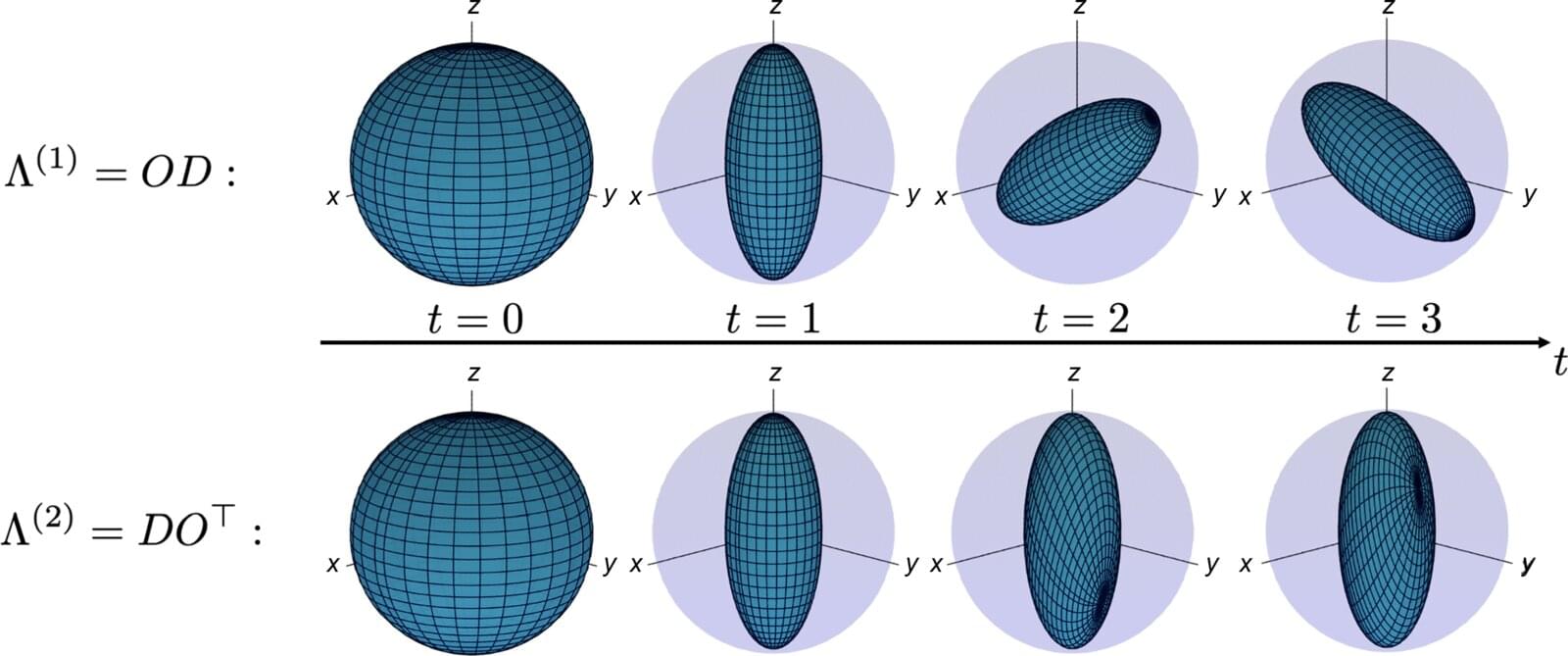
An international group of researchers have investigated the role of memory in quantum systems and dynamics. Their findings show that a quantum process can appear memoryless from one perspective while retaining memory from another. The discovery opens new research avenues into quantum systems and technologies.
In classical physics, the concept of memory is well understood. If the future evolution of a system depends only on its present state, the process is said to be memoryless. On the other hand, if past states continue to influence future outcomes, the system has memory.
In quantum physics, however, this clarity has long been missing. Quantum systems can store and transmit information in ways that have no classical analog, and the act of measurement plays a fundamental role in the dynamics.
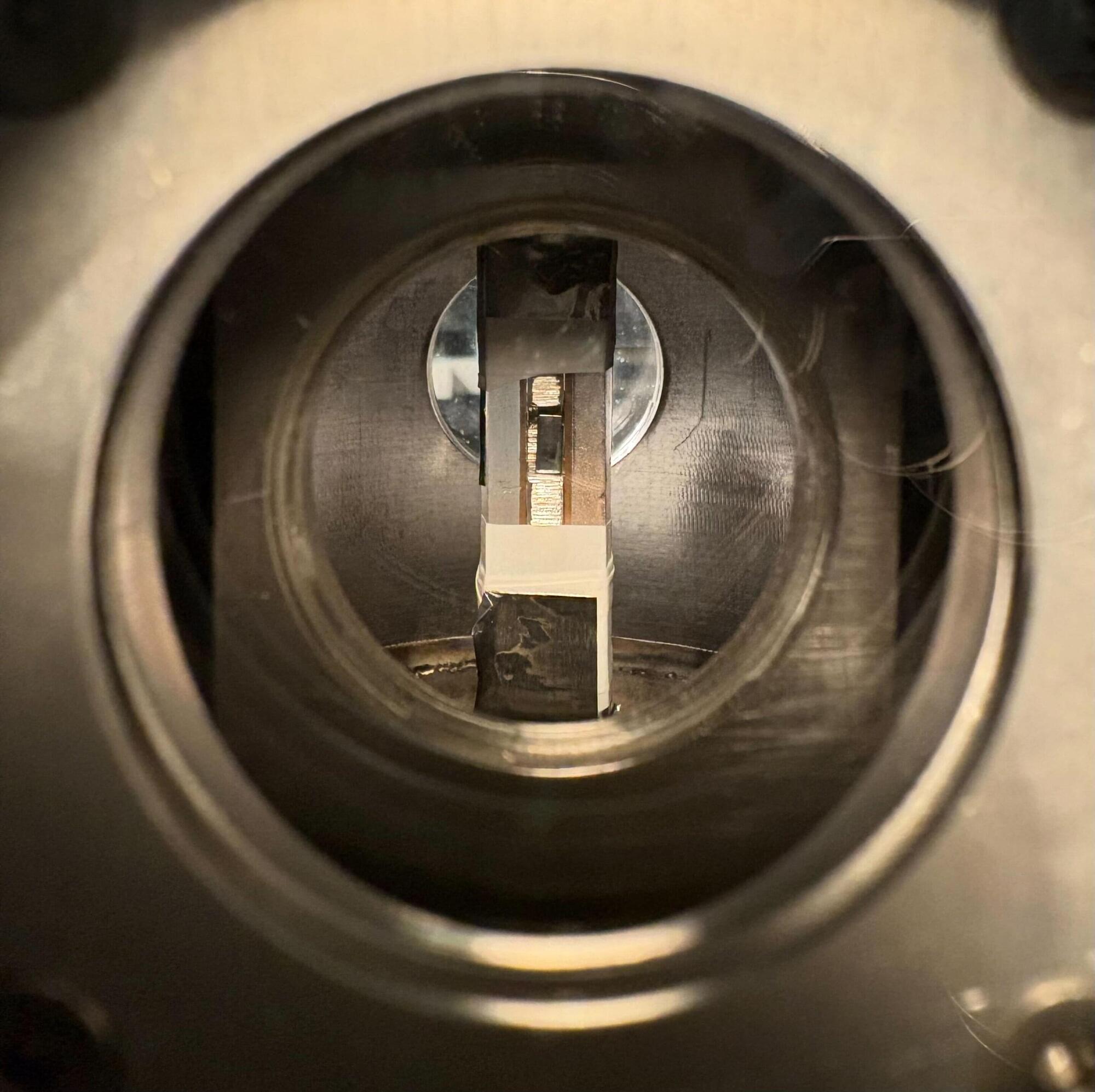
Quantum technologies, computers or other devices that operate leveraging quantum mechanical effects, rely on the precise control of light and matter. Over the past decades, quantum physicists and material scientists have been trying to identify systems that can reliably generate photons (i.e., light particles) and could thus be used to create quantum technologies.
One approach for generating photons relies on silicon color centers, such as the emerging T center. Color centers are defects or irregularities in the crystal structure of silicon characterized by a different arrangement of atoms.
The T center and other silicon color centers can emit light in the wavelength band that is already used by fiber-optic internet cables, which is desirable for the development of quantum networks and quantum communication systems.

Have you ever felt like the world around you isn’t exactly… “real”? Modern physics is starting to suggest something incredible: The universe isn’t made of atoms, energy, or particles. It is made of Information. In this video, we explore the radical “It from Bit” theory and the Holographic Principle. From the mysterious paradoxes of Black Holes and Hawking Radiation to the way quantum entanglement might actually create the fabric of space and time, we dive deep into the mind-bending reality of quantum mechanics. In this video, we cover: Why Stephen Hawking conceded the Black Hole Information Paradox. The Ryu-Takayanagi formula: How entanglement builds geometry. Why 3D space might just be a 2D holographic projection. The “It from Bit” philosophy by John Wheeler. How consciousness relates to Integrated Information Theory (IIT). If reality is just a pattern of qubits in a vast Hilbert space, what does that make us? Join us as we deconstruct the material world and look at the “source code” of the universe. #QuantumPhysics #HolographicUniverse #ItFromBit #TheoreticalPhysics #ScienceDocumentary #SpaceTime #quantuminformation