Toggle light / dark theme

AI threatens to eat business software—and it could change the way we work

In recent weeks, a range of large “software-as-a-service” companies, including Salesforce, ServiceNow and Oracle, have seen their share prices tumble.

Even if you’ve never used these companies’ software tools, there’s a good chance your employer has. These tools manage key data about customers, employees, suppliers and products, supporting everything from payroll and purchasing to customer service.

Now new “agentic” artificial intelligence (AI) tools for business are expected to reduce reliance on traditional software for everyday work. These include Anthropic’s Cowork, OpenAI’s Frontier and open-source agent platforms such as OpenClaw.

Encryption: A Key Guardian of Our Digital Future

By Chuck Brooks and Bill Bowers.


Every time you send a text, pay for groceries with your phone, or use your health site, you are relying on encryption. It’s an invisible shield that protects your data from prying eyes. Encryption is more than just a technological protection; it is the basis for digital trust.

Encryption is more than just safeguarding data; it is also about protecting people. It helps ensure privacy by protecting persons from spying and exploitation. And it is widely adopted to help ensure digital transaction security. For National Security it serves to protect key infrastructure and government communications. And it has a human rights function by providing citizens with peace of mind by ensuring the safety of their personal information. In places where surveillance is widespread, encryption can even defend free expression and opposition. It is a human right in this digital age.

In my book Inside Cyber: How AI, 5G, IoT, and Quantum Computing Will Transform Privacy and Security, I referred to encryption as the “linchpin of privacy and commerce in a connected society.” Without it, the digital economy would crumble under the strain of criminality, fraud, and spying.

Why I Quit ChatGPT and Switched to Claude

“AI will most likely lead to the end of the world, but in the meantime there will be great companies created.” — Sam Altman, OpenAI CEO

I used to think that was dark humor.

This week, I stopped laughing — and cancelled my ChatGPT subscription.

Not because of the technology. Because of the values.

On February 27, Anthropic refused to give the Pentagon unrestricted access to its AI for mass surveillance and autonomous killer weapons. Within hours, OpenAI’s Sam Altman swooped in and took the deal.

One company held the line. The other sprinted to cross it.

‘An AlphaFold 4’ — scientists marvel at DeepMind drug spin-off’s exclusive new AI

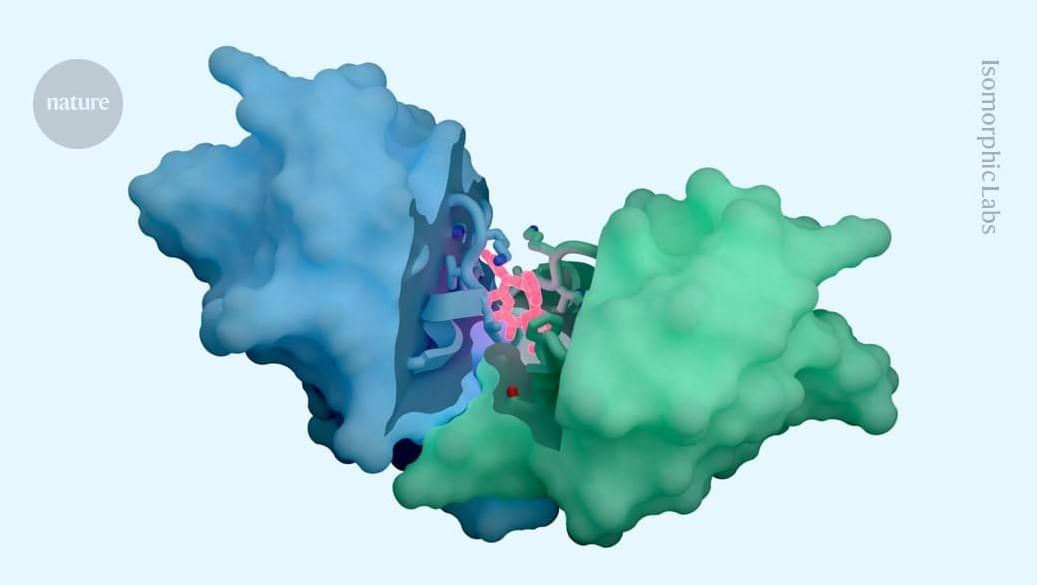
Isomorphic Labs has developed a drug-protein interaction model which surpasses the previous tech in this area. Yet the model is proprietary, so no one knows how it was designed and trained and why it works so well!


Isomorphic Lab’s proprietary drug-discovery model is a major advance, but scientists developing open-source tools are left guessing how to achieve similar results.

Bioinspired robot eye adjusts its pupil to handle harsh lighting

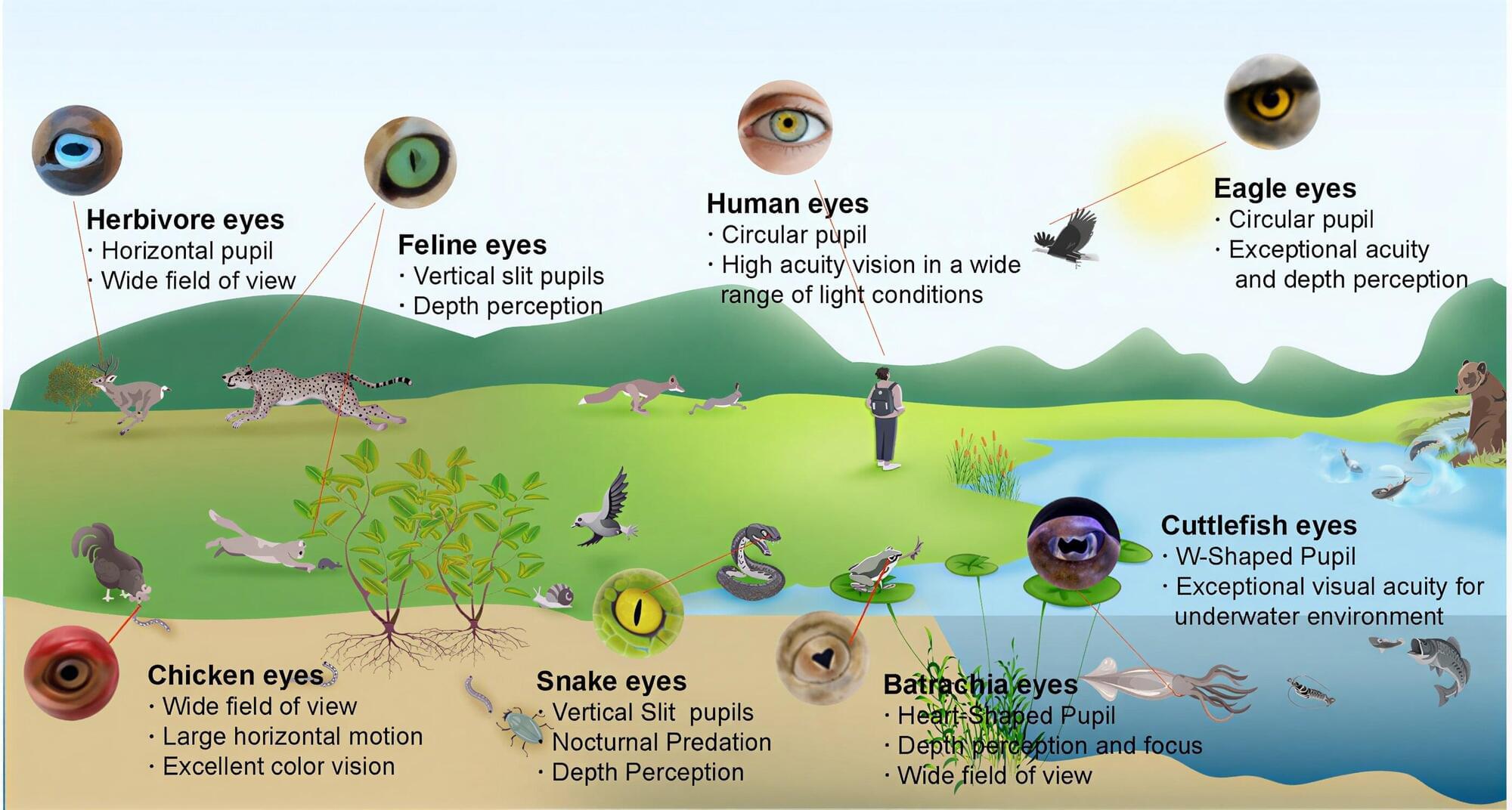
Robot vision could soon get a boost thanks to the development of a bioinspired eye that can automatically adjust its pupil size in response to changing light levels. Robots, self-driving cars and drones often struggle with dynamic lighting. If a car enters a dark tunnel, its camera aperture needs to stay wide open to capture enough light to see, just like our pupils do when the lights go out. But when it exits into daylight, it can be instantly blinded by the glare.

In a study published in the journal Science Robotics, researchers detail how they have created a bioinspired vision system that not only mimics the way eyes see but also adapts to light conditions. The technology is designed to bridge the gap between how a standard camera sees and how living creatures view their surroundings.

Cameras may excel at capturing high-resolution images, but in dynamic environments, they lack the flexibility to adapt.

Letting atomic simulations learn from phase diagrams

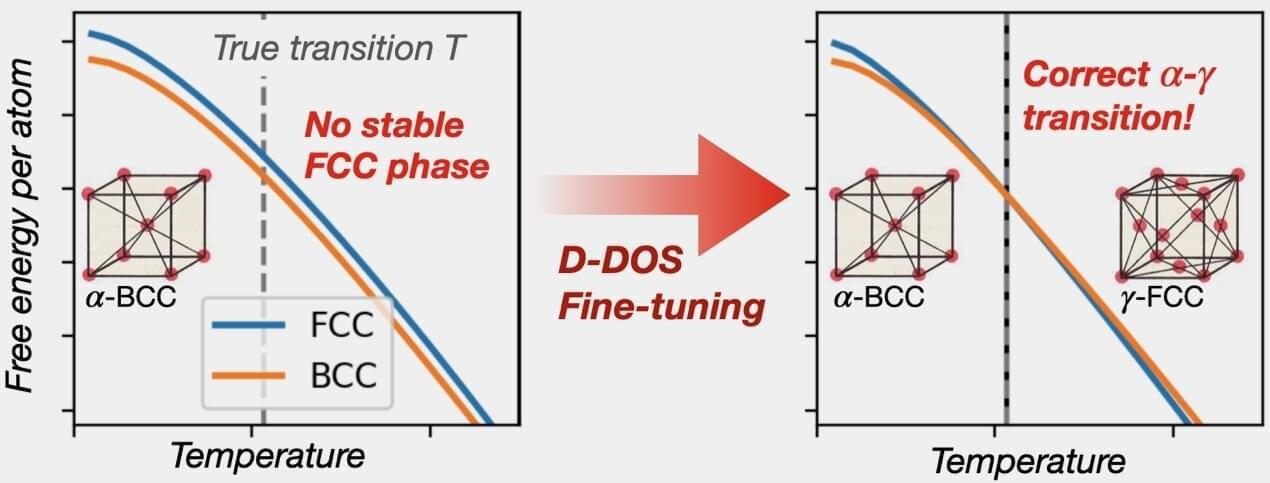
A new computational method allows modern atomic models to learn from experimental thermodynamic data, according to a University of Michigan Engineering and Université Paris-Saclay study published in Nature Communications. Leveraging a machine learning technique called score matching, the method expresses the thermodynamic free energy of atomic systems as a function of the underlying atomic interaction model, unlike standard schemes where the interaction model is fixed.

By returning thermodynamic predictions as functions rather than static numbers, the method, which is also over 10 times more efficient than previous approaches, can easily quantify and help accelerate computational materials discovery by opening up new inverse design capabilities. The method is called “descriptor density of states” and is abbreviated D-DOS.

“The D-DOS method provides a two-way connection between the latest generation of atomic simulations and the classical resource of phase diagrams, exposing these datasets to machine learning-driven computer models,” said Thomas Swinburne, an assistant professor of mechanical engineering at U-M and co-corresponding author of the study.

Tom sits down with Yann LeCun, the Jacob T

Schwartz professor of computer science at NYU, and executive chairman of advanced machine intelligence labs.

Yann is co-winner of the 2018 ACM Turing Award for his research in neural network learning. Yann takes us from his days as a postdoc working with Geoff Hinton, through his days as Chief AI Scientist at Facebook/Meta. His simultaneous roles as a Professor at NYU and Chief AI Scientist at a large AI provider gives Yann a unique perspective on how technological advances and commercial forces combined to get us to today’s state of the art.

Read more

AI could prevent construction delays before they happen

What if a construction project could rewrite its own schedule the moment a problem appears? A new peer-reviewed study from the University of East London (UEL) suggests that artificial intelligence could make this possible—detecting emerging risks and automatically adjusting project plans before delays spread across a site. The research is published in the journal Frontiers in Built Environment.

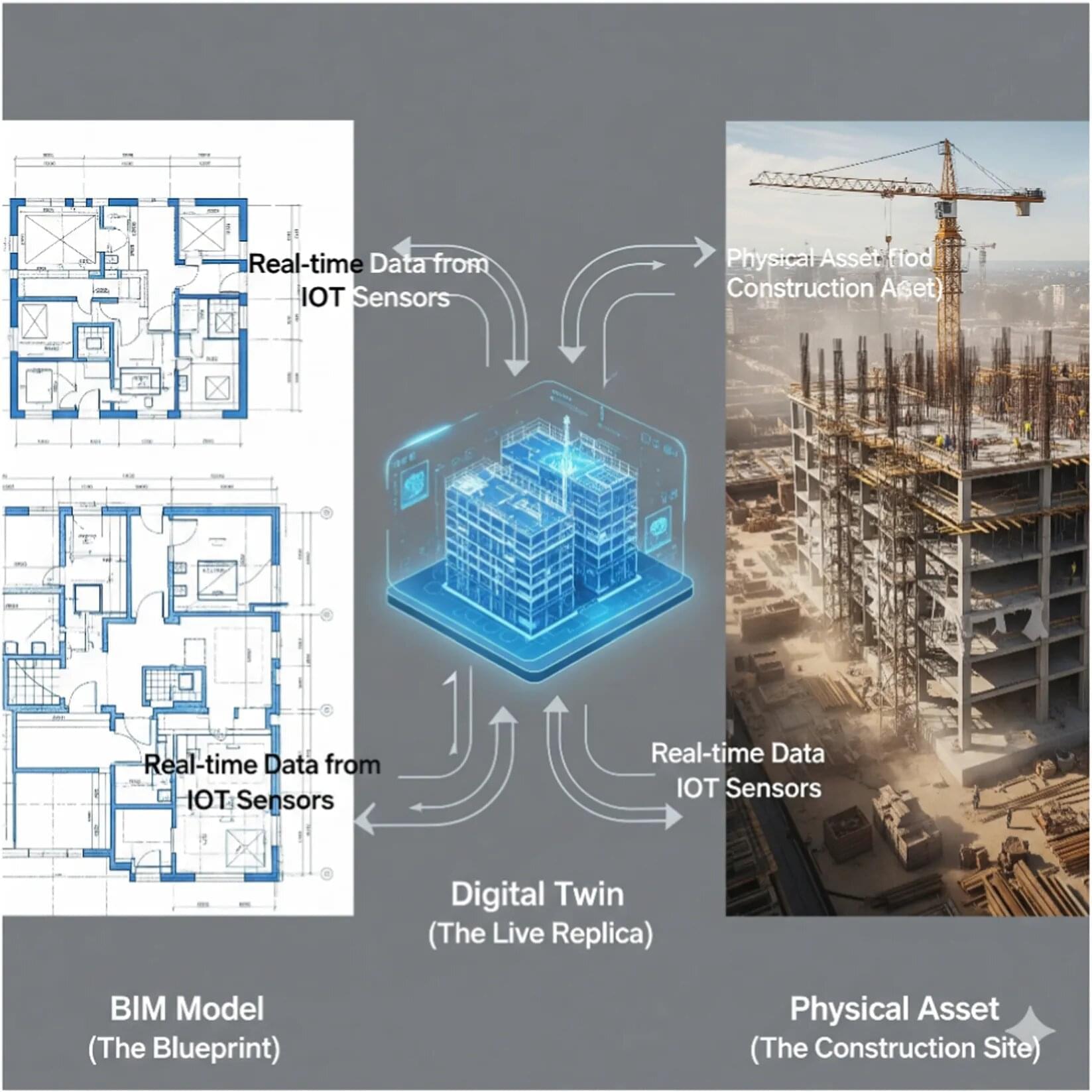
Rather than proposing a single new tool, the research outlines how existing technologies could be connected in ways they currently are not. Today, safety monitoring systems, digital risk registers and scheduling platforms typically operate in isolation. As a result, risks are identified, but the project timetable often continues unchanged.

The findings come from a systematic review of 60 peer-reviewed studies on AI in construction management. The research proposes a framework showing how risk warnings could trigger immediate, machine-readable planning decisions.

Light-powered soft robot jumps 188 times without electronics

An insect-scale robot that jumps using only light has completed 188 continuous leaps without a single electronic component.

The soft machine bends, snaps and resets itself automatically, powered entirely by material physics instead of chips or wires.

The robot is built mainly from liquid crystal elastomers, a rubber-like material that changes shape when exposed to light. When illuminated, the material bends and stores elastic energy in a curved beam structure.

/* */