Toggle light / dark theme

Physicist Publishes Method For Communicating With Parallel Universes

🌏 Get Exclusive NordVPN 2Y deal + 4 months extra here → https://nordvpn.com/sabine It’s risk-free with Nord’s 30-day money-back guarantee! ✌

In the many worlds theory of quantum physics, all possible outcomes of a quantum event occur, creating branching parallel worlds in which a different outcome is reality. According to a recently published paper, communication between those worlds should be possible under our current understanding of quantum physics. Sounds crazy? Let’s take a look.

Paper: https://arxiv.org/abs/2601.

👕T-shirts, mugs, posters and more: ➜ https://sabines-store.dashery.com/
💌 Support me on Donorbox ➜ https://donorbox.org/swtg.
👉 Transcript with links to references on Patreon ➜ / sabine.
📝 Transcripts and written news on Substack ➜ https://sciencewtg.substack.com/
đŸ“© Free weekly science newsletter ➜ https://sabinehossenfelder.com/newsle
 Audio only podcast ➜ https://open.spotify.com/show/0MkNfXl
 🔗 Join this channel to get access to perks ➜ / @sabinehossenfelder 📚 Buy my book ➜ https://amzn.to/3HSAWJW #science #sciencenews #physics #quantum.
👂 Audio only podcast ➜ https://open.spotify.com/show/0MkNfXl

🔗 Join this channel to get access to perks ➜
/ @sabinehossenfelder.
📚 Buy my book ➜ https://amzn.to/3HSAWJW

#science #sciencenews #physics #quantum

Gravitational lensing technique unveils supermassive black hole pairs

Supermassive black hole binaries form naturally when galaxies merge, but scientists have only confidently observed a very few of these systems that are widely separated. Black hole binaries that closely orbit each other have not yet been measured. In a paper published today in Physical Review Letters, the researchers suggest hunting down the hidden systems by searching for repeating flashes of light from individual stars lying behind the black holes as they are temporarily magnified by gravitational lensing as the binary orbits.

Supermassive black holes reside at the centers of most galaxies. When two galaxies collide and merge, their central black holes eventually form a bound pair, known as a supermassive black hole binary. These systems play a crucial role in galaxy evolution and are among the most powerful sources of gravitational waves in the universe. While future space-based gravitational-wave observatories like LISA will be able to probe such binaries directly, researchers are now showing that they may already be detectable using existing and upcoming electromagnetic surveys.

A Giant Star Vanished, And Scientists Think a Black Hole Is to Blame

One of the brightest stars in the Andromeda galaxy quietly collapsed into a black hole without any of the fanfare of a spectacular supernova.

What makes this startling discovery even more remarkable is that the first signs of the transformation were recorded back in 2014 – data that is crucial for understanding the different ways black holes can form after the death of a giant star.

“This has probably been the most surprising discovery of my life,” says astronomer Kishalay De of Columbia University in the US, who led the research. “The evidence of the disappearance of the star was lying in public archival data, and nobody noticed for years until we picked it out.”

A possible first-ever Einstein probe observation of a black hole tearing apart a white dwarf

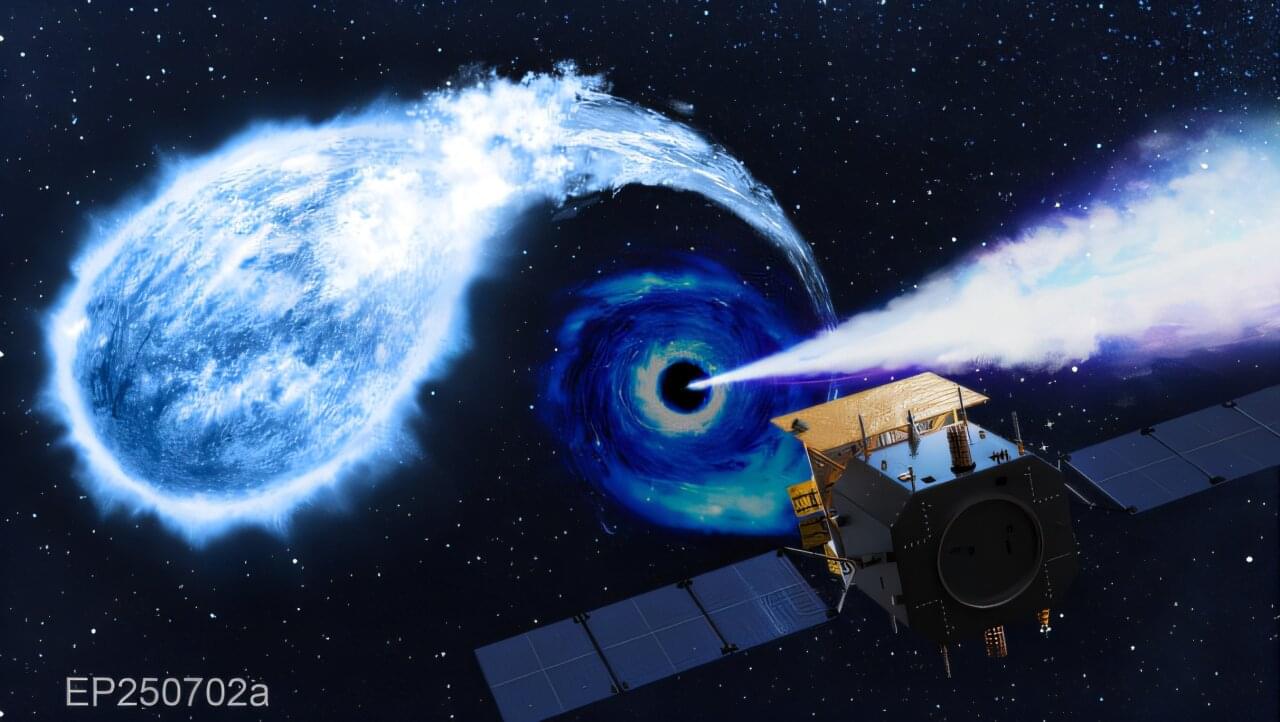
On July 2, 2025, the China-led Einstein Probe (EP) space telescope detected an exceptionally bright X-ray source whose brightness varied rapidly during a routine sky survey. Its unusual signal immediately set it apart from ordinary cosmic sources, triggering rapid follow-up observations by telescopes worldwide.

Study of the event was coordinated by the EP Science Center of the National Astronomical Observatories, Chinese Academy of Sciences (NAOC), with participation from multiple research institutions in China and abroad. Astrophysicists from the Department of Physics at The University of Hong Kong (HKU), who are integral members of the EP scientific team, worked together with the broader collaboration to interpret the event, proposing that it may mark the moment when an intermediate-mass black hole tears apart and consumes a white dwarf star.

If confirmed, this would be the first observational evidence of such an extreme black hole “feeding” process. The findings have been published as a cover article in Science Bulletin.

The Computer That Consumes Stars

And a black hole would be a type of computer if we could use it.


What is the ultimate limit of a civilization? It isn’t conquering a galaxy. It is processing power.

A “Matrioshka Brain” is a megastructure so massive it encases an entire star. It is a Dyson Sphere upgraded to God-Mode. Instead of just harvesting energy, it uses the star to fuel a computer powerful enough to simulate trillions of universes.

If a civilization builds one of these, they don’t need to explore space. They can upload their minds to a digital heaven and live forever. This might be the terrifying reason why the universe is so silent.

Chapters:

Old galaxies in a young universe?

The standard cosmological model (present-day version of “Big Bang,” called Lambda-CDM) gives an age of the universe close to 13.8 billion years and much younger when we explore the universe at high-redshift. The redshift of galaxies is produced by the expansion of the universe, which causes emitted wavelengths to lengthen and move toward the red end of the electromagnetic spectrum.

The further away a galaxy is, the more rapidly it is moving with respect to us, and so the greater is its redshift; and, given that the speed of light is finite, the more we travel to the past. Hence, measuring the age of very high redshift galaxies would be a way to test the cosmological model. Galaxies cannot be older than the age of the universe in which they are; it would be absurd, like a son older than his mother.

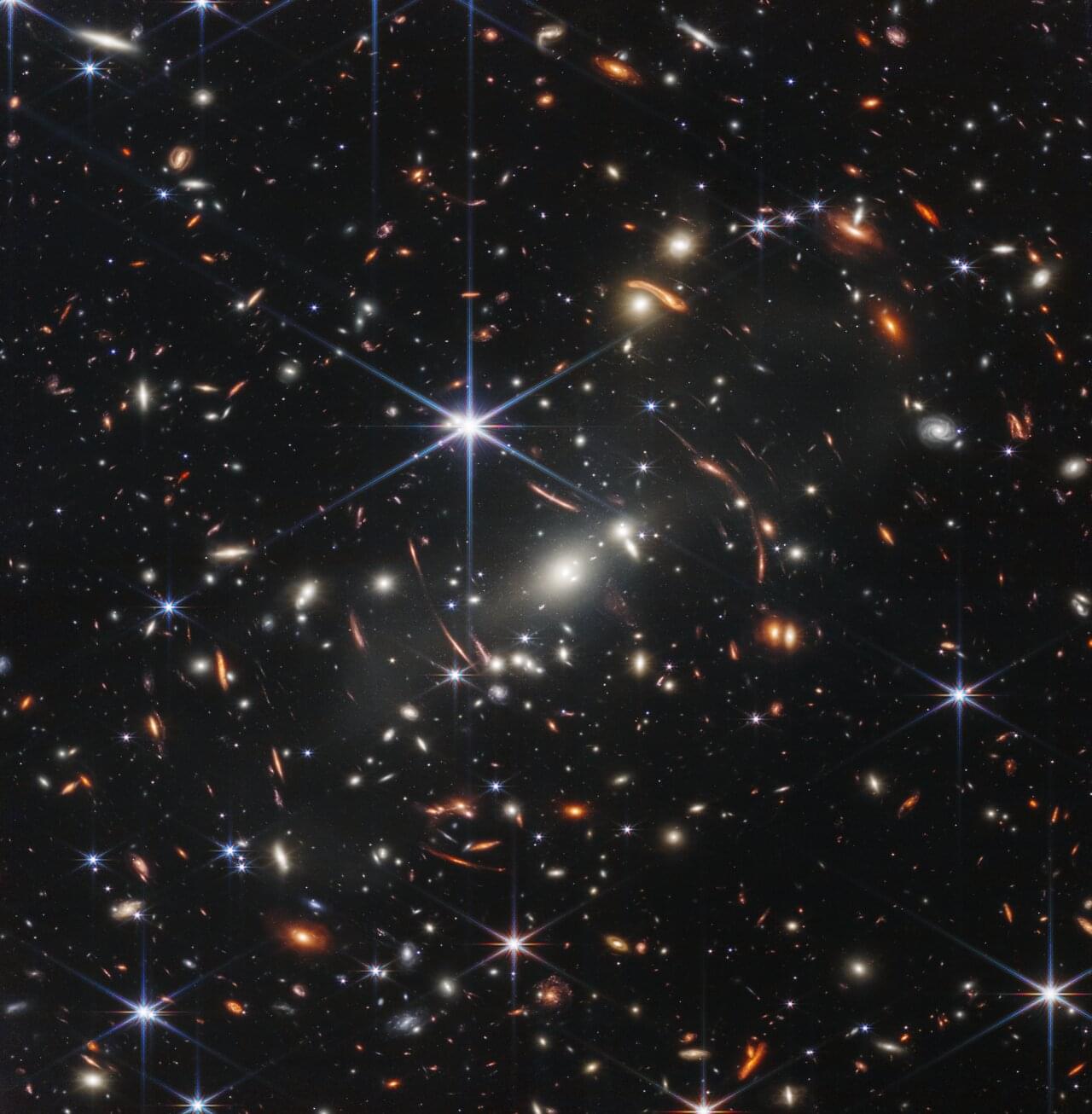
In work carried out with my colleague, Carlos M. Gutiérrez, at the Canary Islands Astrophysics Institute (IAC; Spain), we analyzed 31 galaxies with average redshift 7.3 (when the universe was 700 Myr old, according to the standard model) observed with the most powerful available telescope available: the James Webb Space Telescope (JWST).

Experiment relies on pulsars to probe dark matter waves

Dark matter is a type of matter that is predicted to make up most of the matter in the universe, yet it is very difficult to detect using conventional experimental techniques, as it does not emit, absorb, or reflect light. While some past studies gathered indirect hints of its existence, dark matter has never been directly observed; thus, its composition remains a mystery.

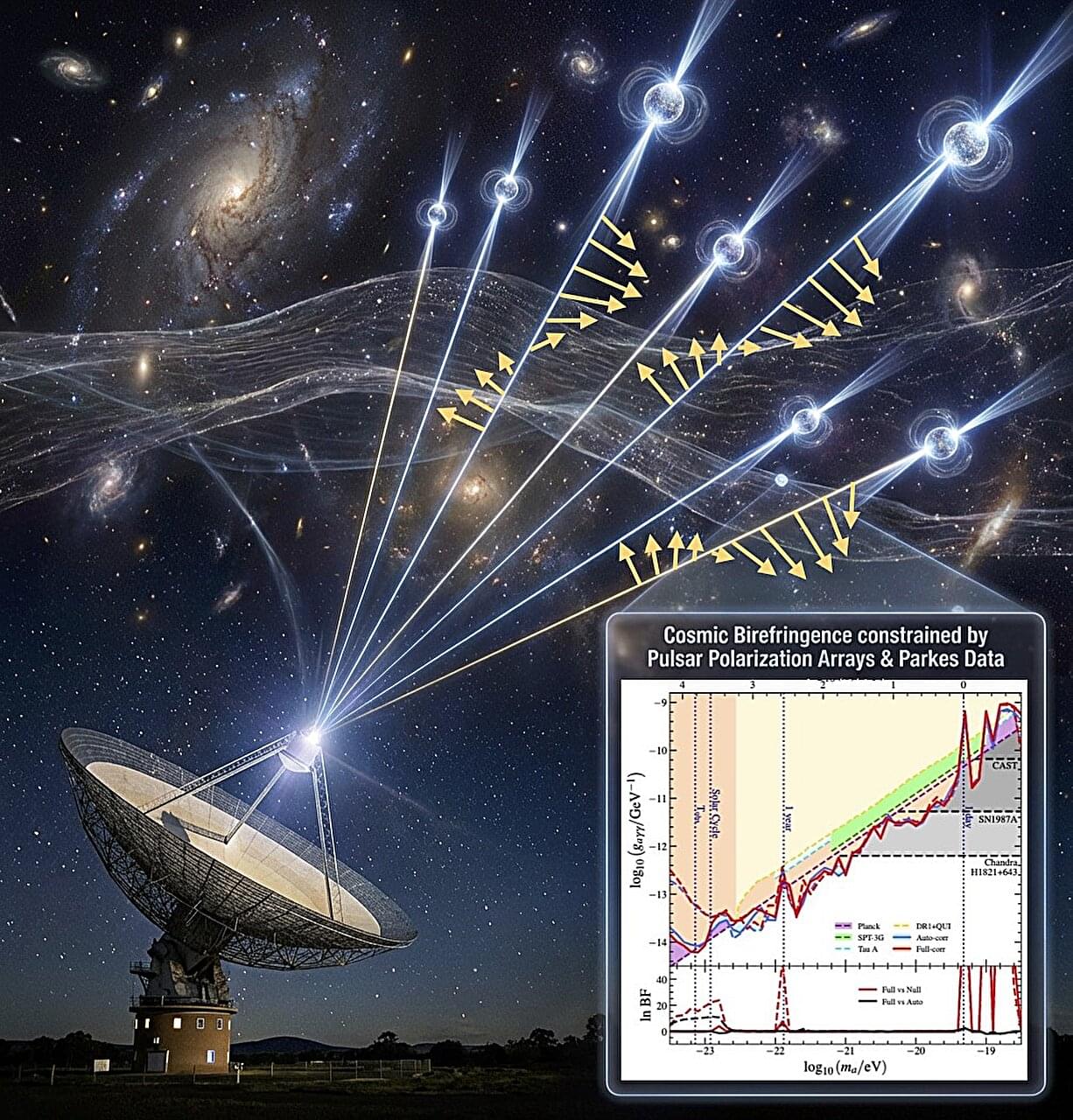
One hypothesis is that dark matter is made up of axionlike particles with an extremely low mass, broadly referred to as ultralight axionlike dark matter (ALDM). As these particles are exceedingly light, predictions suggest that they would behave more like waves than individual particles on a galactic scale.

The PPTA collaboration, a large team of researchers based at different institutes worldwide, applied a new approach to search for ALDM by cross-correlating polarization data of pulsars, neutron stars that spin rapidly and emit highly regular beams of radio waves. This approach, termed the “Pulsar Polarization Array (PPA),” entails measuring the polarization position angles of a series of pulsars and how they changed over time and with respect to pulsar spatial position.

Scientists show how to narrow the hunt for merging giant black holes

A new detection framework explains how astronomers can isolate extremely slow gravitational wave signals.


By combining subtle distortions in spacetime with observations of unusually bright galactic centers, the study authors have demonstrated a practical method for identifying likely locations of merging supermassive black holes.

/* */