The rapid advancement of technologies, particularly AI, is driving the world towards an economic singularity where the marginal cost of essentials approaches zero, leading to a deflationary future and a potential transformation of traditional systems and societies ##
## Questions to inspire discussion.
Education Transformation.
🎓 Q: How will AI reduce education time while improving effectiveness?
A: AI will customize education to each child’s learning style, reducing daily learning time to 1 hour per day while delivering 5 times more effective learning compared to traditional methods, with costs falling to zero within 3–5 years and breaking the university industry that currently creates massive student debt.
Recorded 10 February 2026. Sebastien Bubeck of OpenAI presents “A Combinatorics Problem” at IPAM’s AI for Science Kickoff. Learn more online at: https://www.ipam.ucla.edu/programs/sp… AI for Science Kickoff 2026: This inaugural event brings together the pioneers who are defining how AI will accelerate scientific discovery — from Nobel and Fields Medal laureates to the leaders shaping AI innovation across academia, research labs, and industry. The event features keynote talks by leading AI Scientists and Mathematicians, as well as panel discussions focusing on perspectives on AI from three sides: Mathematics, Higher Education, and Industry. This event is organized jointly by IPAM, the UCLA Division of Physical Sciences, the SAIR Foundation and the World Leading Scientists Institute.
We usually think of the past as something that no longer exists. It happened — and then it disappeared. But modern physics challenges this intuition in a profound way.
In this video, we explore why the past may still exist — not as memory, but as structure.
Drawing on ideas associated with Leonard Susskind, this documentary examines how relativity and modern spacetime physics reshape our understanding of time. In Einstein’s framework, there is no universal “now.” What is past for one observer may be present or future for another, depending on motion and frame of reference.
This destroys the idea that the past vanishes.
In the spacetime view, the universe is a four-dimensional structure. Events are not erased — they are located. The past is not something that disappeared. It is something that exists in a different region of spacetime.
From this perspective, time does not flow in the way we imagine. The sense of disappearance comes from human experience, not from fundamental physics.
Optimus robots, with their rapidly advancing capabilities in AI and dexterity, are poised to revolutionize the field of surgery, potentially surpassing human surgeons in precision and accessibility within a few years and making traditional surgical expertise and even medical school obsolete.
## Questions to inspire discussion.
Healthcare Access & Economics.
🏥 Q: How will Optimus robots change healthcare costs and accessibility?
A: Optimus surgeon robots will operate at costs limited to capital expenditure and electricity, enabling deployment in rural villages and developing countries like Zimbabwe and throughout Africa, demonetizing and decentralizing access to medical care that will exceed what presidents currently receive.
We experience time as something that flows. Seconds pass. Moments disappear. The future becomes the present and then turns into the past.
But modern physics does not describe time this way.
In this video, we explore why time — as we intuitively understand it — may not exist at the fundamental level of reality.
Drawing on ideas associated with Leonard Susskind, this documentary examines how relativity and quantum physics challenge the idea of a flowing temporal river. Einstein’s theory removes the notion of a universal present. There is no global “now” that sweeps across the universe.
Without a universal present, the idea of time flowing becomes difficult to define physically.
In the relativistic picture, spacetime is a four-dimensional structure. Events are not created moment by moment. They are embedded in geometry. The equations of physics do not contain a moving present. They describe relations between events.
Want to make a career jump in 2026? If cybersecurity is on your radar, you’ll want to get prepared for the CISSP exam, one of the most prestigious credentials in the industry that signals you’re ready for high-level roles.
You don’t have to head back to school to get prepped for a cybersecurity career. The CISSP Security & Risk Management Training Bundle can prepare you in the comfort of your home. This bundle of eight courses teaches you how to protect computers, networks, and data from threats and helps you master the eight domains information security professionals should know.
Are we chasing the wrong goal with Artificial General Intelligence, and missing the breakthroughs that matter now?
On this episode of Digital Disruption, we’re joined by former research director at Google and AI legend, Peter Norvig.
Peter is an American computer scientist and a Distinguished Education Fellow at the Stanford Institute for Human-Centered Artificial Intelligence (HAI). He is also a researcher at Google, where he previously served as Director of Research and led the company’s core search algorithms group. Before joining Google, Norvig headed NASA Ames Research Center’s Computational Sciences Division, where he served as NASA’s senior computer scientist and received the NASA Exceptional Achievement Award in 2001.He is best known as the co-author, alongside Stuart J. Russell, of Artificial Intelligence: A Modern Approach — the world’s most widely used textbook in the field of artificial intelligence.
Peter sits down with Geoff to separate facts from fiction about where AI is really headed. He explains why the hype around Artificial General Intelligence (AGI) misses the point, how today’s models are already “general,” and what truly matters most: making AI safer, more reliable, and human-centered. He discusses the rapid evolution of generative models, the risks of misinformation, AI safety, open-source regulation, and the balance between democratizing AI and containing powerful systems. This conversation explores the impact of AI on jobs, education, cybersecurity, and global inequality, and how organizations can adapt, not by chasing hype, but by aligning AI to business and societal goals. If you want to understand where AI actually stands, beyond the headlines, this is the conversation you need to hear.
In this episode: 00:00 Intro. 01:00 How AI evolved since Artificial Intelligence: A Modern Approach. 03:00 Is AGI already here? Norvig’s take on general intelligence. 06:00 The surprising progress in large language models. 08:00 Evolution vs. revolution. 10:00 Making AI safer and more reliable. 12:00 Lessons from social media and unintended consequences. 15:00 The real AI risks: misinformation and misuse. 18:00 Inside Stanford’s Human-Centered AI Institute. 20:00 Regulation, policy, and the role of government. 22:00 Why AI may need an Underwriters Laboratory moment. 24:00 Will there be one “winner” in the AI race? 26:00 The open-source dilemma: freedom vs. safety. 28:00 Can AI improve cybersecurity more than it harms it? 30:00 “Teach Yourself Programming in 10 Years” in the AI age. 33:00 The speed paradox: learning vs. automation. 36:00 How AI might (finally) change productivity. 38:00 Global economics, China, and leapfrog technologies. 42:00 The job market: faster disruption and inequality. 45:00 The social safety net and future of full-time work. 48:00 Winners, losers, and redistributing value in the AI era. 50:00 How CEOs should really approach AI strategy. 52:00 Why hiring a “PhD in AI” isn’t the answer. 54:00 The democratization of AI for small businesses. 56:00 The future of IT and enterprise functions. 57:00 Advice for staying relevant as a technologist. 59:00 A realistic optimism for AI’s future.
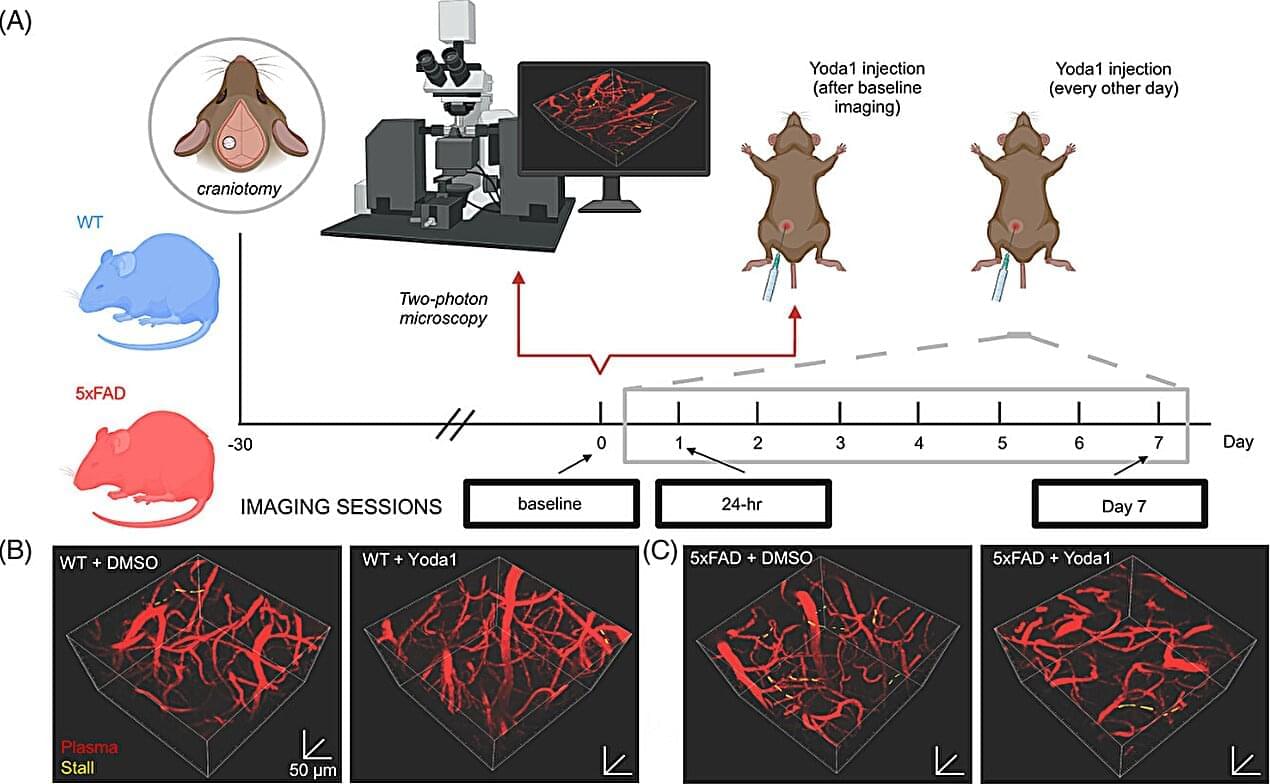
Supriya Chakraborty might have been studying insects in a lab had it not been for an immunology college instructor in India who taught him about the superheroes inside him—immune cells that wage a battle against bacteria, parasites, and a host of other adversaries that invade our bodies. “That really fascinated me,” Chakraborty recalled. “My focus shifted from entomology to wanting to solve illnesses that affect humans, specifically neurodegenerative disorders.”
Zeynab Tabrizi would take quite a different path to studying conditions that damage and destroy parts of the human nervous system. She had long been a student of immunology and neuroscience in her native Iran, conducting research that explored the causes of disorders like schizophrenia and autism. “I had some experience working in industry,” she said, “but my heart was in academia.”
Now, their paths have intersected at the University of Miami. As Ph.D. students in the College of Arts and Sciences’ Department of Biology, Chakraborty and Tabrizi conduct research that could help blaze a trail to more effective treatments for Alzheimer’s disease, perhaps even leading to a cure for the memory-robbing disorder that affects more than 7 million older adults in the U.S.
Google has collaborated with African universities and research institutions to launch WAXAL, an open-source speech database designed to support the development of voice-based artificial intelligence for African languages.
African institutions, including Makerere University in Uganda, the University of Ghana, Digital Umuganda in Rwanda, and the African Institute for Mathematical Sciences (AIMS), participated in the data collection for this initiative. The dataset provides foundational data for 21 Sub-Saharan African languages, including Hausa, Luganda, Yoruba, and Acholi.
WAXAL is designed to support the development of speech recognition systems, voice assistants, text-to-speech tools, and other voice-enabled applications across sectors such as education, healthcare, agriculture, and public services.
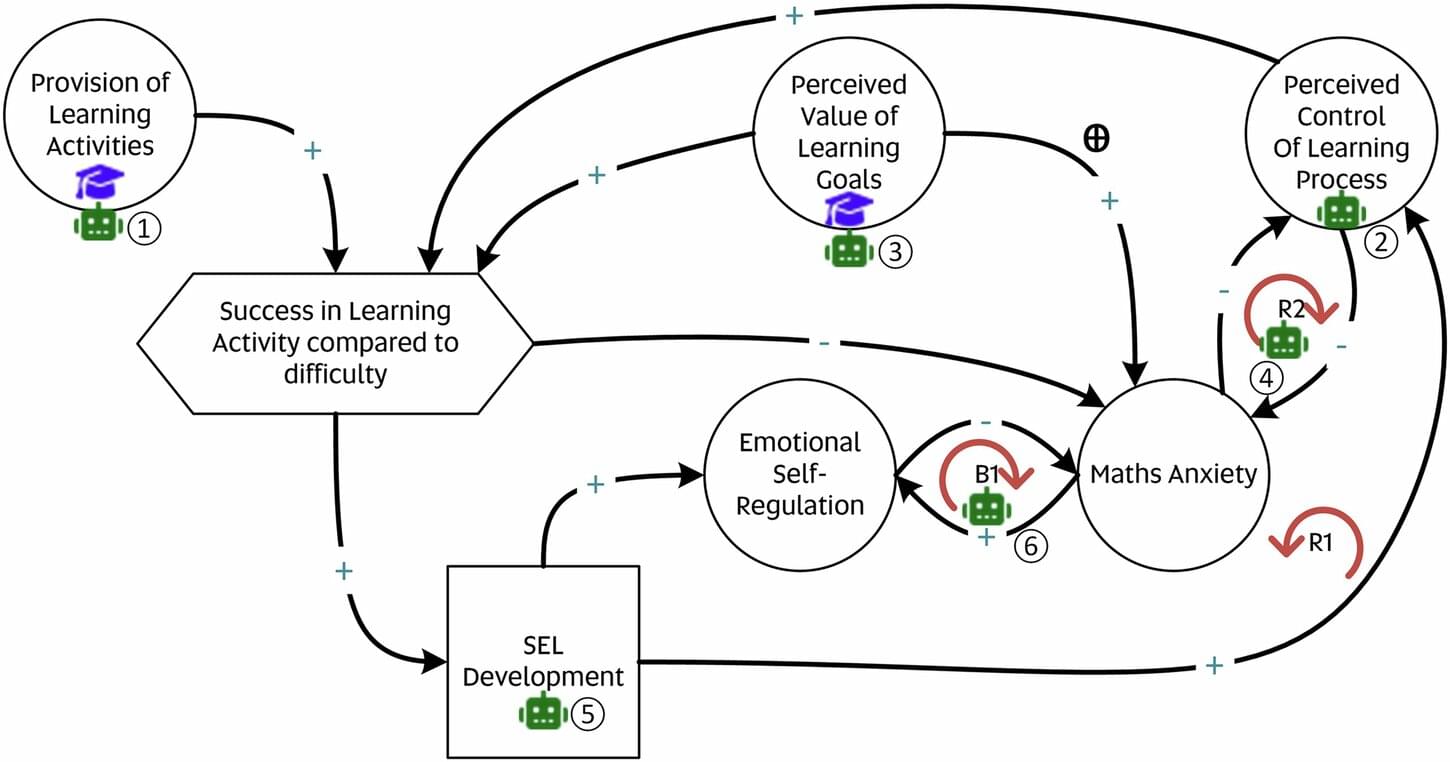
Math anxiety is a significant challenge for students worldwide. While personalized support is widely recognized as the most effective way to address it, many teachers struggle to deliver this level of support at scale within busy classrooms. New research from Adelaide University shows how artificial intelligence (AI) could help address challenges such as math anxiety by using a student’s inputs and identifying signs of anxiety or disengagement during learning.
Published in npj Science of Learning,the study suggests that when AI systems are designed to use the right data and goals, they can adapt their responses to help counteract negative emotional experiences associated with math, before these feelings escalate.
Lead researcher Dr. Florence Gabriel says AI has the potential to transform how math anxiety is supported, by offering timely, tailored interventions that step through learning and build student well-being.