Toggle light / dark theme

Get the latest international news and world events from around the world.

Log in for authorized contributors

How a One-in-a-Billion Mistake Made the Universe Possible

Huge thanks to KiwiCo for sponsoring today’s video! Go to https://www.kiwico.com/spacetime and use code SPACETIME for 50% off your first monthly crate.

Check Out Reactions on the Earth Month Playlist.
• Why Norway’s Osmosis Power Plant Failed.

At one-one-thousandth of a second after the Big Bang, the great annihilation event should have wiped out all matter, leaving a universe of only radiation. Why still don’t know why any matter survived. Well, a new finding from the LHC brings us one step closer to understanding why there’s something rather than nothing.

Dr. Caplan Paper for Review:
https://arxiv.org/abs/2312.

Sign Up on Patreon to get access to the Space Time Discord!
/ pbsspacetime.

Check out the Space Time Merch Store.
Adversarial AI reveals mechanisms and treatments for disorders of consciousness

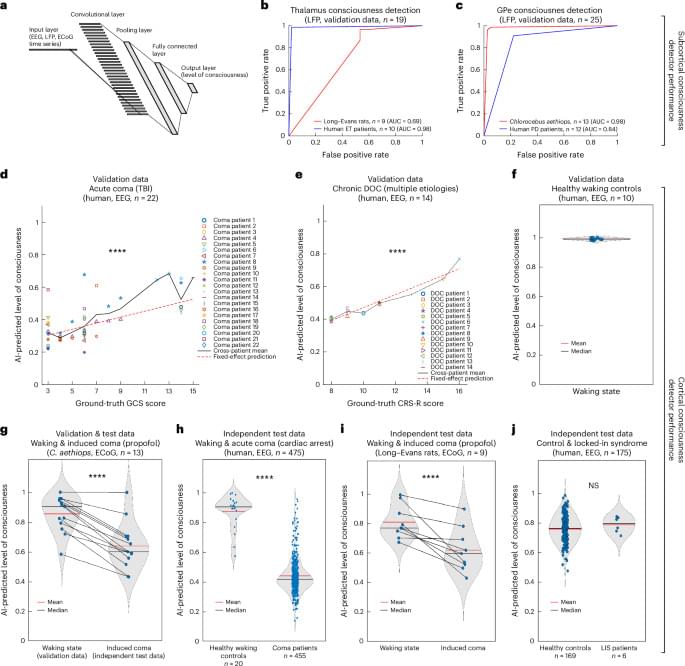
Researchers led by UCLA have developed an adversarial AI framework that may help explain how consciousness breaks down after brain injury — and how it might one day be restored. Published in Nature Neuroscience, the study used deep neural networks trained on more than 680,000 neuroelectrophysiology samples and validated findings across 565 patients, healthy volunteers, and animals. The model identified specific circuit-level disruptions linked to disorders of consciousness, including the basal ganglia indirect pathway and altered inhibitory cortical wiring.

What makes this so important is that it pushes consciousness research closer to mechanism. Instead of only asking what consciousness is, this kind of work asks: what specific brain circuitry fails when consciousness is lost, and can that failure be targeted? The study also identified high-frequency stimulation of the subthalamic nucleus as a promising intervention, supported by human electrophysiological data. This is the kind of neuroscience that makes consciousness feel less like pure philosophy — and more like something we may eventually model, test, and repair.

Abstract: Nature Neuroscience Adversarial AI reveals mechanisms and treatments for disorders of consciousness.


Toker et al. present an AI framework that identifies mechanisms of consciousness. The model predicts new drivers of unconsciousness and identifies subthalamic nucleus stimulation as a potential therapy for disorders of consciousness.

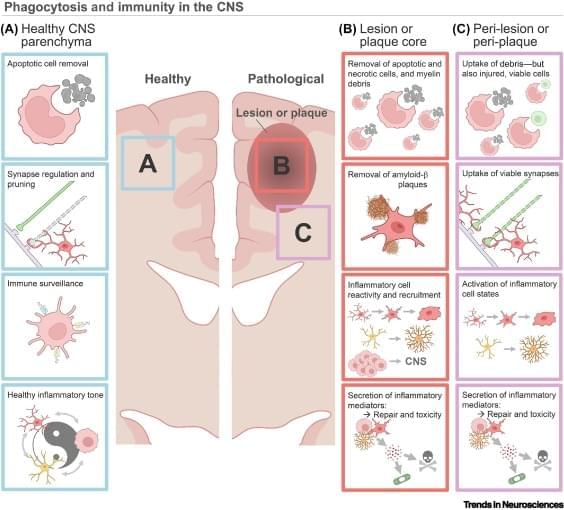
Phagocytosis and neuroinflammation: orchestrating central nervous system homeostasis, repair, and the resolution of inflammation

Brain phagocytosis and neuroinflammation.

Phagocytes in the central nervous system (CNS), including astrocytes, microglia, and macrophages, shape development and homeostasis by pruning synapses and removing apoptotic debris.

Phagocytosis is mediated by various ligand–receptor dyads and signaling pathways, enabling CNS phagocytes to respond to neuroimmune shifts across the lifespan and during pathology.

Phagocytosis pathways regulate recovery in various models of CNS pathology, including multiple sclerosis, CNS injury, ischemic stroke, and age-associated neurodegeneration.

Phagocytosis pathways are intimately integrated with the inflammatory cell state and remove viable cells in pathology-adjacent tissue, highlighting the complexity of targeting these systems.

To maximize benefit and minimize off target damage, new phagocytic-based approaches should optimize drug delivery timing and location, tailored to each CNS pathology. sciencenewshighlights ScienceMission https://sciencemission.com/resolution-of-inflammation


Building a National Quantum Strategy

Andrea Damascelli has always been fascinated by light. He uses it to probe materials on an atomic level, and his observations have contributed to the condensed-matter community’s understanding of high-temperature superconductors and quantum materials. His research group at the University of British Columbia (UBC) uses time-, spin-, and angle-resolved photoemission spectroscopy, an intricate technique that maps the energy and velocity of electrons as they propagate through materials.

In 2015, Damascelli spearheaded efforts that brought one of the first Canada First Research Excellence Fund (CFREF) grants to UBC’s Quantum Matter Institute. As the institute’s scientific director, he found himself at the helm of a full-blown research center—hiring faculty, expanding staff, and upgrading facilities. A few months later, he received a special request from Canada’s National Research Council: join leaders from across Canada’s quantum ecosystem to advise on a strategy for growing the country’s quantum community as a whole.

Physics Magazine chatted with Damascelli as he looked back on the beginning of Canada’s first National Quantum Strategy (NQS) and looked forward to developing a self-sustaining quantum research and training powerhouse.

Organocatalytic strategy provides a metal-free route to antiviral candidates

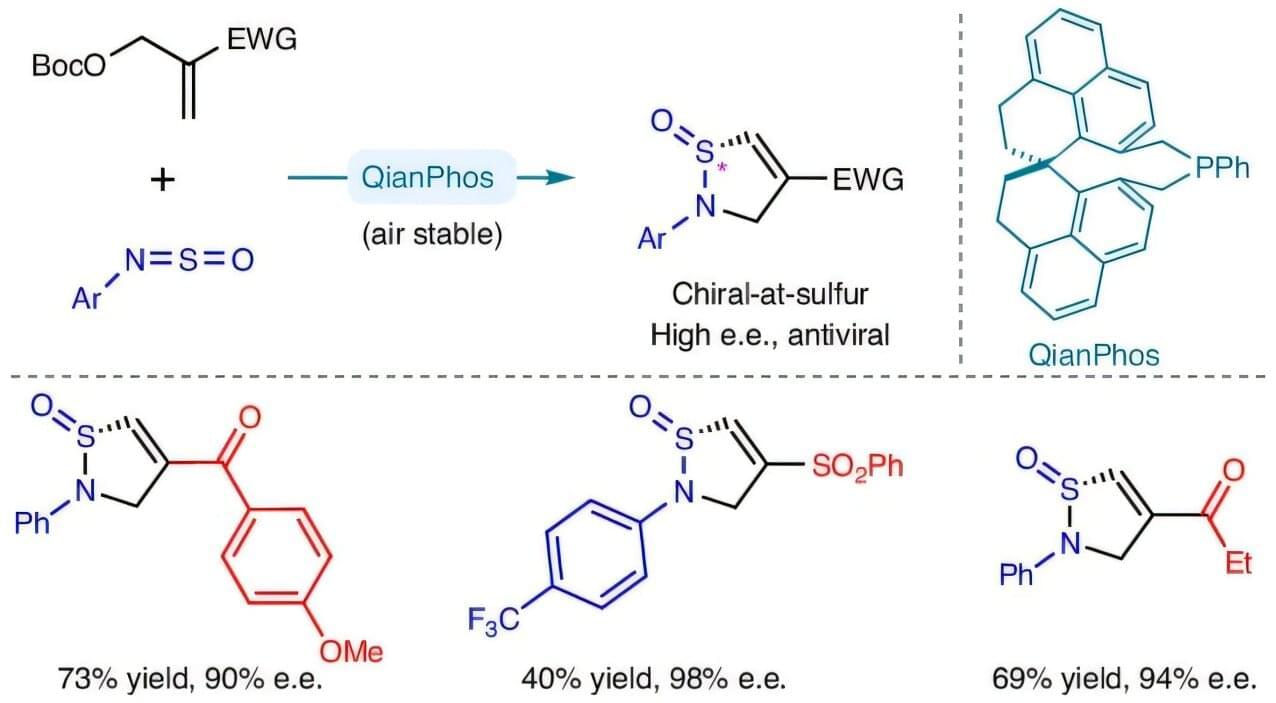
A research team led by Prof. Sun Jianwei has achieved an advancement in organic synthesis and medicinal chemistry by developing an air-stable chiral phosphine-catalyzed enantioselective approach to synthesize enantioenriched S(IV)-stereogenic vinyl sulfinamides—an under-explored class of organosulfur compounds with promising antiviral activity.

The importance of chiral-at-sulfur compounds in drug discovery and organic synthesis is indisputable. More than a quarter of top-selling small molecule pharmaceuticals contain sulfur atoms, and chiral sulfinamides bearing S(IV) chirality are key building blocks for medicinal chemistry, asymmetric synthesis auxiliaries, and catalytic ligands. However, current methods to access enantioenriched sulfinamides rely on transition metal catalysis with organometallic nucleophiles, and efficient organocatalytic strategies have long remained unexplored, creating a critical gap in synthetic chemistry for this valuable chemical space.

To address this challenge, Prof. Sun’s team published a study in Nature Chemistry detailing the design and synthesis of a novel C₂-symmetric chiral phosphine catalyst—QianPhos—derived from the SPHENOL chiral skeleton. This custom catalyst exhibits extraordinary air stability and structural rigidity, which enables highly chemo-, enantio-, and diastereoselective C−S bond formation via a [3+2] annulation between Morita–Baylis–Hillman (MBH) esters and sulfinylamines.

Silicon nanospheres boost WS₂ second-harmonic generation 40-fold while preserving polarization

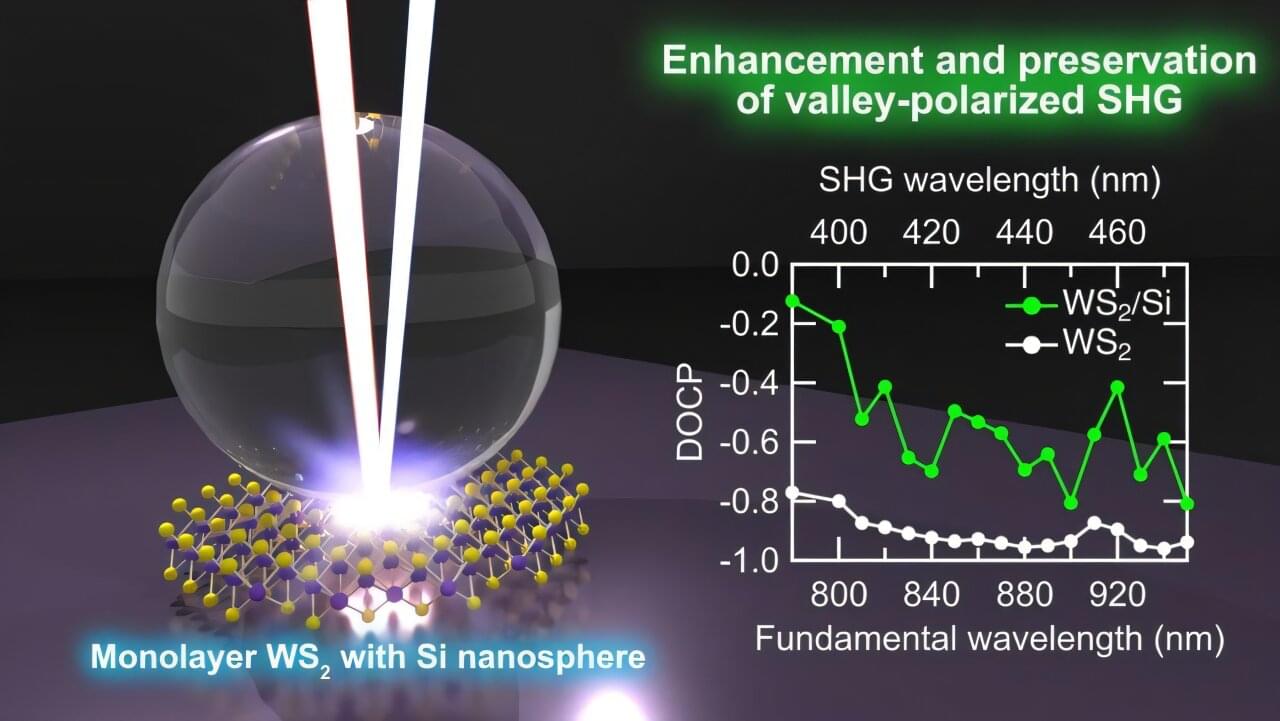
A research team has demonstrated that silicon nanospheres can strongly enhance second-harmonic generation (SHG) from an atomically thin semiconductor while preserving the circular polarization information tied to its valley degree of freedom. The study, published in Nano Letters, provides design guidelines for efficient, polarization-preserving nonlinear light sources at the nanoscale.

SHG is a nonlinear optical process that converts light to twice its original frequency. Monolayer transition-metal dichalcogenides (TMDs) such as tungsten disulfide (WS2) possess valley-dependent optical selection rules that link circular polarization directly to the electronic valley index, making the SHG polarization state a direct readout of valley information.

To harness the valley degree of freedom as an information carrier in valleytronics, it is essential to enhance the SHG signal while preserving its circular polarization. However, the atomic-scale thickness of monolayer TMDs severely limits conversion efficiency, and previous approaches using nanostructures to boost the signal have disrupted the valley-polarization information—a dilemma of “enhance the signal, lose the polarization.”

Hearing research traces evolution of key inner ear protein

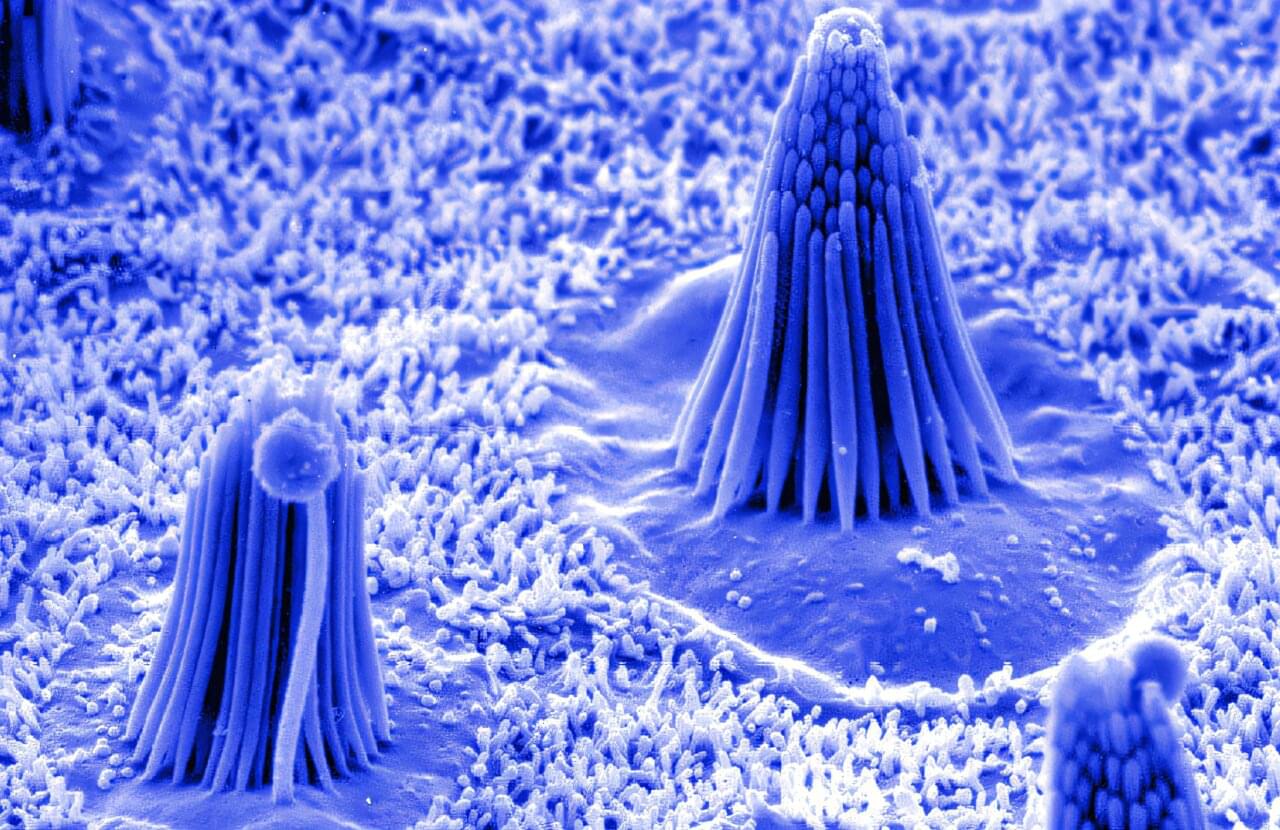
In the intricate machinery of the inner ear, hearing begins with a protein that moves a few billionths of a meter up to 100,000 times per second. That protein, called TMC1, sits at the tips of sensory hair cells deep in the snail-shaped cochlea. When sound waves move these microscopic hairs, TMC1 acts as a channel, opening and allowing charged particles to flow into the cell and trigger an electrical signal to the brain.

Without TMC1, that signal never starts. Mutations in the TMC1 gene are a well-known cause of hereditary hearing loss in humans. Because of this central role, TMC1 is an attractive target for researchers designing gene therapies aimed at restoring hearing. Several groups are testing ways to supply working copies of the gene or fix harmful mutations.

For these efforts to be safe and effective, scientists need to know in detail how TMC1 is built, how it opens, and which parts of the protein are most sensitive to change. However, the hair-cell system that includes TMC1 is so complex, sensitive, and hard to access that it is notoriously difficult to take apart and study directly.

‘Cool’ detectors cut neutrino mass upper limit by an order of magnitude

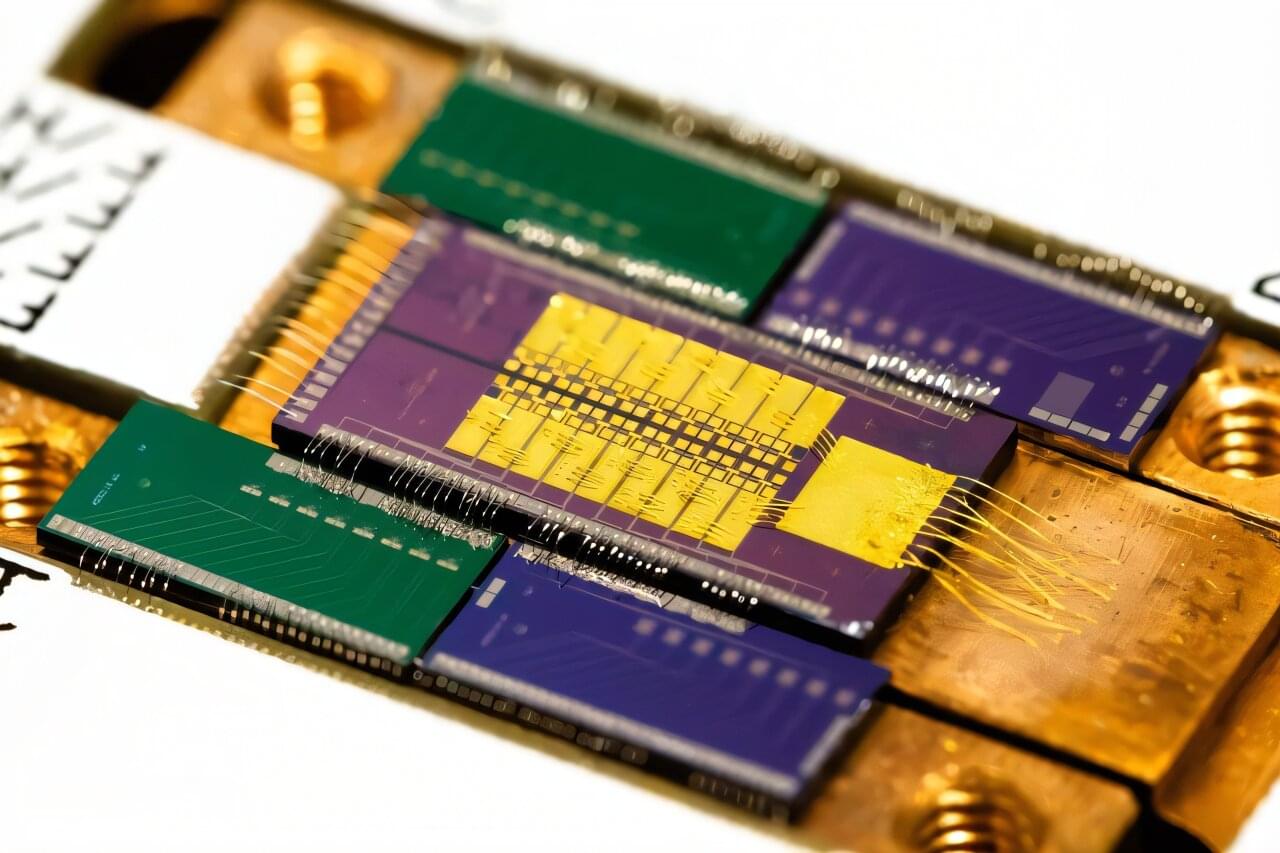
Their mass is extremely low, but how light are neutrinos really? A collaboration comprising German and international research groups has optimized its experiments to determine the mass of these “ghost particles.” In doing so, they succeeded in further adjusting downward the upper limit on the neutrino mass scale that had previously been determined in similar experiments. The study is published in the journal Physical Review Letters.

As part of the “Electron Capture in Ho-163 Experiment” (ECHo), the researchers are using the isotope Holmium-163 (Ho-163), whose decay processes allow for conclusions on the neutrino mass. According to ECHo spokesperson Prof. Dr. Loredana Gastaldo, a scientist at Heidelberg University’s Kirchhoff Institute for Physics, the current results verify that even larger-scale investigations will be feasible in future to get even closer to the mass of neutrinos and ultimately precisely determine it.

Neutrinos are elementary particles with extremely low mass that have no electrical charge. Because their interaction with matter is very weak, the properties of these “ghost particles” are very difficult to determine. This is especially true for the neutrino mass, which has yet to be precisely measured, with only its upper limit being known. According to Gastaldo, determining the mass could pave the way for new theoretical models beyond the standard model of particle physics and thereby contribute to a better understanding of the evolution of our universe.

JWST reveals most distant red galaxy yet at redshift 11.45

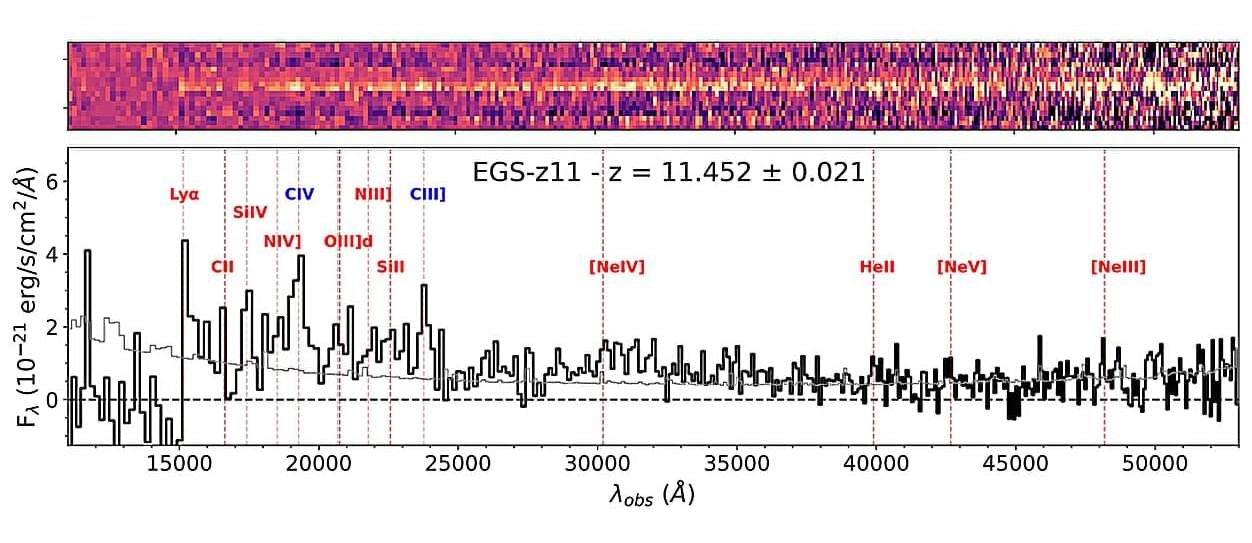
Using the James Webb Space Telescope (JWST), astronomers have discovered a new red galaxy at a redshift of approximately 11.45. The newfound galaxy, which received designation EGS-z11-R0, turns out to be the most distant red galaxy detected to date. The discovery was detailed in a paper published March 18 on the arXiv pre-print server.

High-redshift galaxies (with redshifts above 10.0) identified by JWST, therefore when the universe was only a few hundred million years old, are predominantly characterized by extremely blue rest-frame ultraviolet (UV) slopes. This is due to the fact that they are composed of very young, massive stars that emit intense UV light, with minimal dust attenuation.

However, recent observations have revealed the existence of a small population of high-redshift red galaxies, therefore exhibiting significantly redder UV continua. It is assumed that these galaxies are already full of dust and mature stars.

Webb and Hubble share the most comprehensive view of Saturn to date

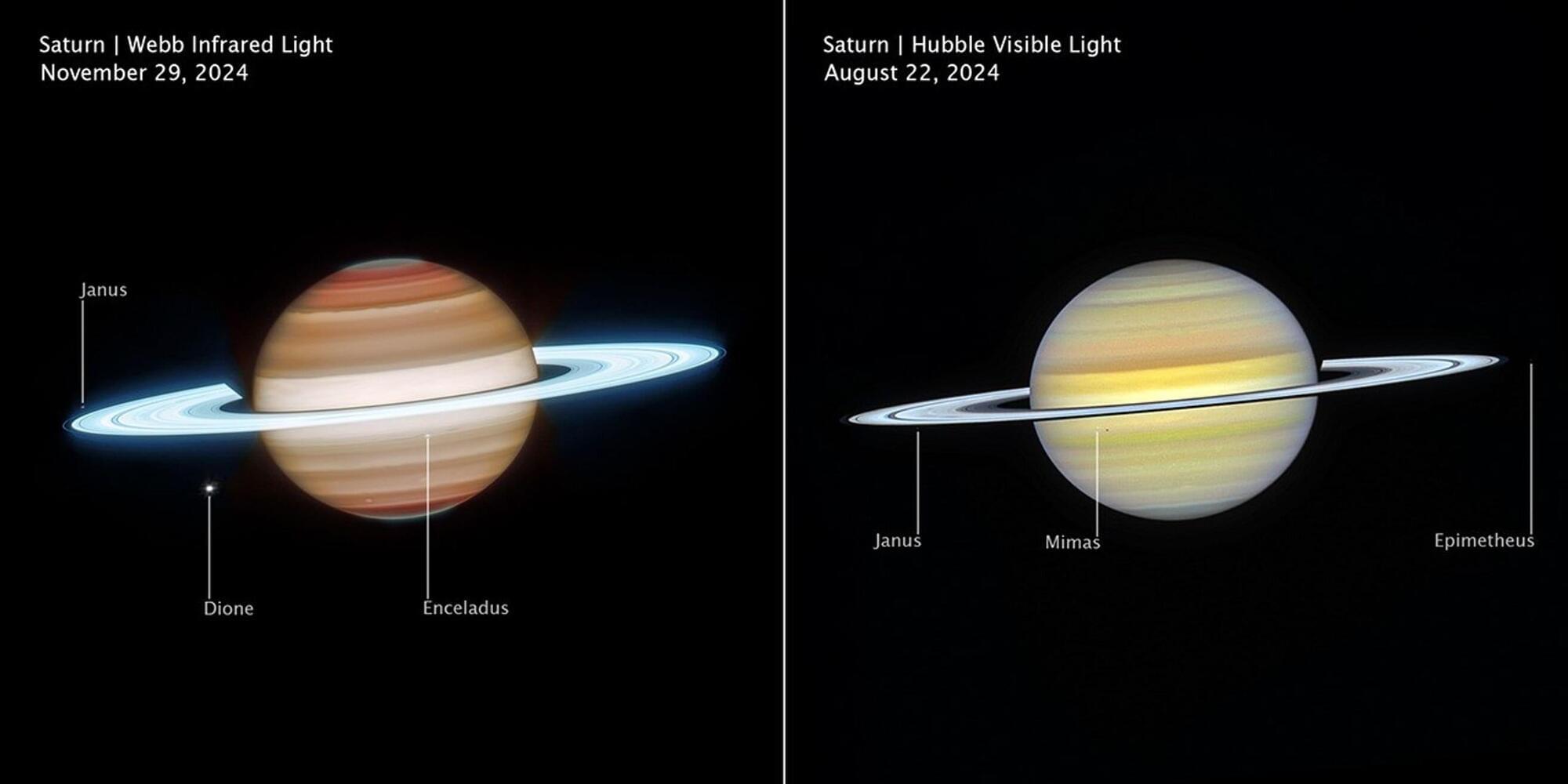
NASA’s James Webb Space Telescope and Hubble Space Telescope have teamed up to capture new views of Saturn, revealing the planet in strikingly different ways. Observing in complementary wavelengths of light, the two space observatories provide scientists with a richer, more layered understanding of the gas giant’s atmosphere.

Both sense sunlight reflected from Saturn’s banded clouds and hazes, but where Hubble reveals subtle color variations across the planet, Webb’s infrared view senses clouds and chemicals at many different depths in the atmosphere, from the deep clouds to the tenuous upper atmosphere.

Together, scientists can effectively “slice” through Saturn’s atmosphere at multiple altitudes, like peeling back the layers of an onion. Each telescope tells a different part of Saturn’s story, and the observations together help researchers understand how Saturn’s atmosphere works as a connected three-dimensional system. Both complement previous observations done by NASA’s Cassini orbiter during its time studying the Saturnian system from 1997 to 2017.

/* */